10 hr
Delphi Mythology & Arachova Full-Day Tour from Athens
- Expert local guide
- Small group
- Skip-the-line access
- Free cancellation
Delphi Day Tours from Athens — Oracle Site & Museum
UNESCO sanctuary perched on Parnassus slopes, where ancient prophecy shaped empires
Compare fares, pick the fit — all bookings are mobile-voucher and eligible for free cancellation where shown.
10 hr
11 hr
10 hr
Selecting the right ticket for your delphi day tours from athens is essential, as the archaeological site and museum operate under a single unified entrance policy. Whether you choose a digital pass or a guided excursion, all options provide access to the core sanctuary and its historical artifacts.
| General Admission Standard Entry (On-site/Online) |
Top pick Guided Access Combined Tour Entry |
|
|---|---|---|
| Entrance Fee | 20 EUR | 20 EUR (often included in tour package) |
| Access Levels | Archaeological Site and Museum | Archaeological Site and Museum |
| Timed Entry | No (Flexible Access) | Yes (per group schedule) |
| Best Arrival | 08:00–10:00 | 08:00–10:00 |
| Best For | Independent travelers | First-time visitors wanting insights |
| See tickets & prices |
Verdict: For the best experience during your delphi day tours from athens, the guided tour is recommended for first-timers to navigate the steep terrain and interpret the ruins effectively.
Worth it for history seekers and mythology enthusiasts
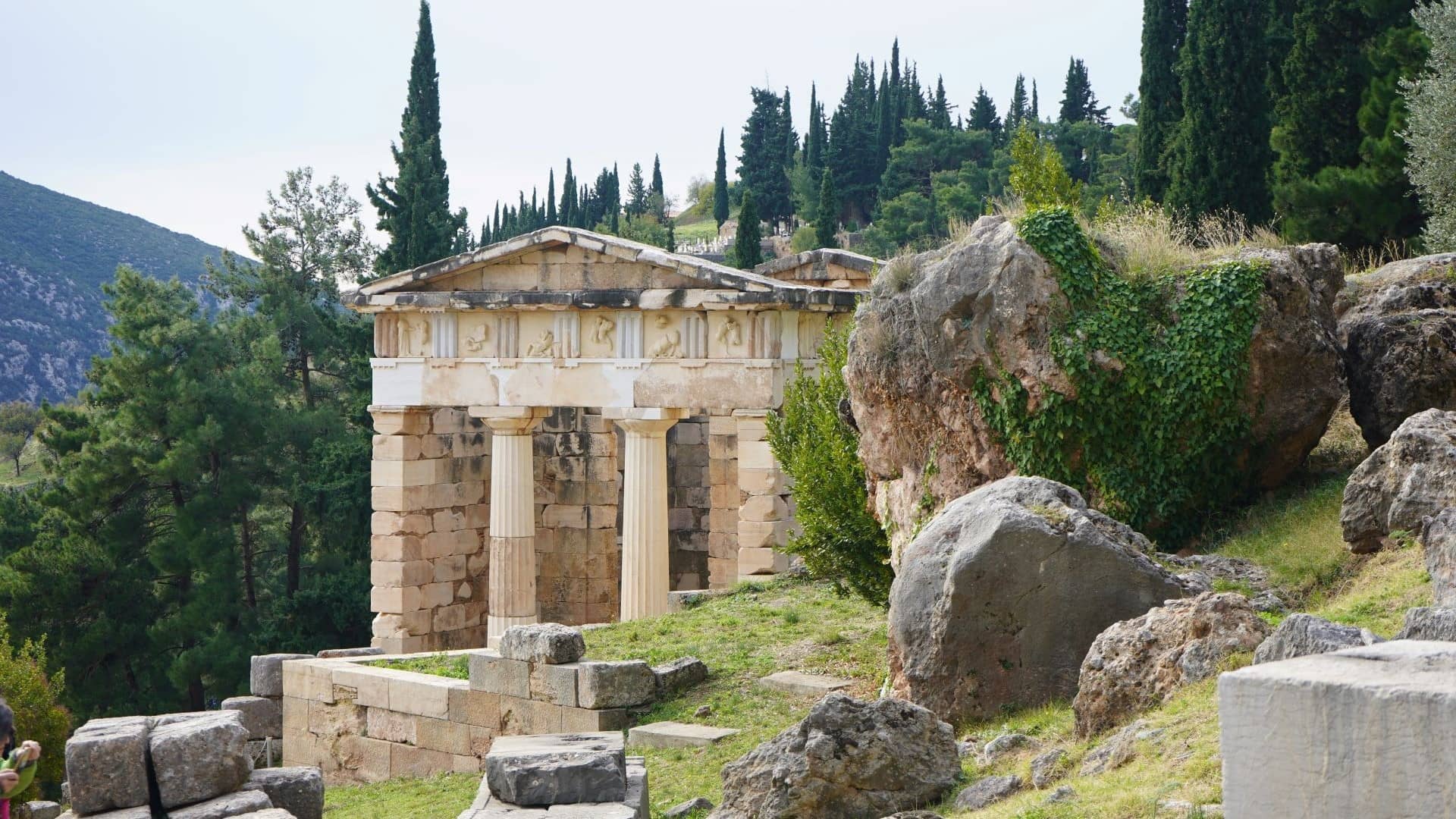
Delphi day tours from Athens deliver exceptional value for travelers prioritizing ancient Greek heritage over beach time. The 12-hour round trip grants access to one of antiquity's most sacred sites—the oracle sanctuary where kings and citizens sought Apollo's prophecy—plus the Archaeological Museum housing the Charioteer bronze and Sphinx of Naxos. Tour packages bundle transport, guided commentary, and the 20 EUR site entry, eliminating logistics stress. The UNESCO-listed sanctuary sprawls across Mount Parnassus slopes, revealing the Temple of Apollo, ancient theater, and stadium where Pythian Games unfolded. Small-group Delphi day tours from Athens tours add Arachova village stops for mountain scenery contrast. The investment pays off for first-timers seeking Greece's mythological core beyond Athens—Delphi tickets unlock narratives that defined Western civilization. Casual sightseers may find the 3-hour drive each way taxing, but those drawn to sacred landscapes and oracular legend will consider the full-day commitment essential. VR audio guide options deepen immersion in the Castalian Spring rituals and Treasury of the Athenians friezes without requiring advance archaeology knowledge.
Bottom line: If Greece's mythological heart matters more than convenience, delphi day tours from athens tour packages justify every hour spent traveling.
They complement each other; most visitors who do both call the Peloponnese route the more varied experience, while Delphi remains the supreme choice for dramatic mountain landscapes and ancient oracular history.
|
Top pick Delphi Tours |
Mycenae/Epidaurus Route | |
|---|---|---|
| Focus | Ancient Oracle and mountain scenery | |
| Landscape | High-altitude cliffs and valleys | |
| Duration | Approx. 10 hours | |
| Cultural depth | Mythology and sacred history | |
| Key stop | Temple of Apollo and museum | |
| Ideal for | History buffs and nature lovers | |
| See tickets & prices |
Verdict: Choose Delphi day tours from athens if you crave breathtaking mountain views and ancient spirituality, or select the Peloponnese circuit for a broader mix of bronze-age ruins, seaside charm, and acoustic marvels in a single delphi day tours from athens tour. Whether you prioritize deep dives into myth or varied coastal exploration, booking your delphi day tours from athens tickets in advance ensures a seamless archaeological experience.
Hand-picked experiences loved by thousands of travelers
Full day (approximately 9 hours)
Free Cancellation
Journey to the legendary Oracle site, explore world-class ancient artifacts, and wander a picturesque mountain village
10 hours
Free Cancellation
Journey to the ancient oracle site, explore Apollo's sanctuary, and visit the acclaimed archaeological museum
10 hours
Free Cancellation
Journey to the UNESCO sanctuary of Delphi, explore ancient ruins and museum treasures, then visit charming Arachova village
10 hours
Free Cancellation
Journey to the ancient Oracle of Delphi with audio guides and VR, then explore a charming mountain village
2 days
Free Cancellation
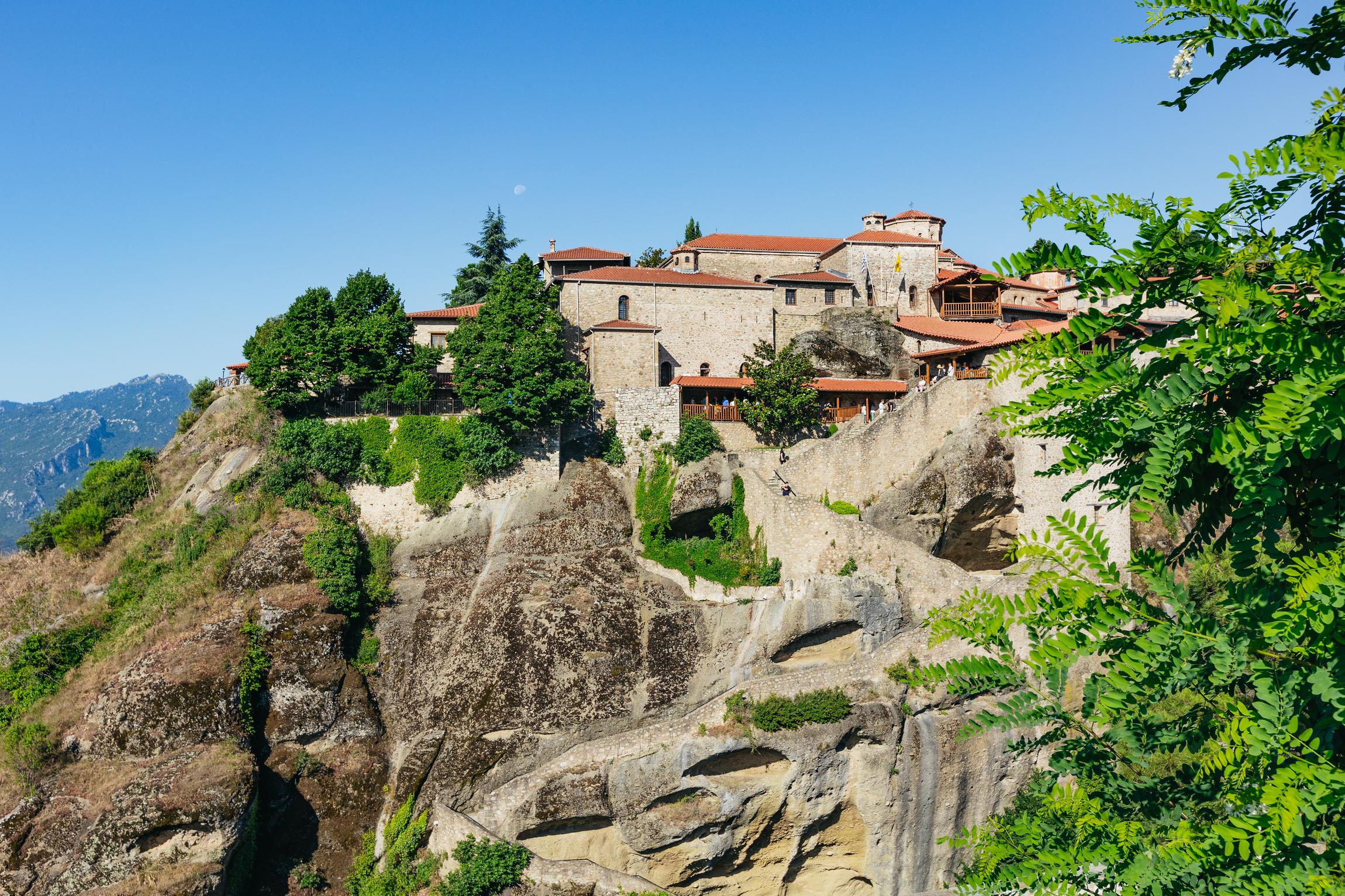
Explore ancient Oracle ruins and cliff-top monasteries on this scenic two-day escape from Athens
12 hours
Free Cancellation
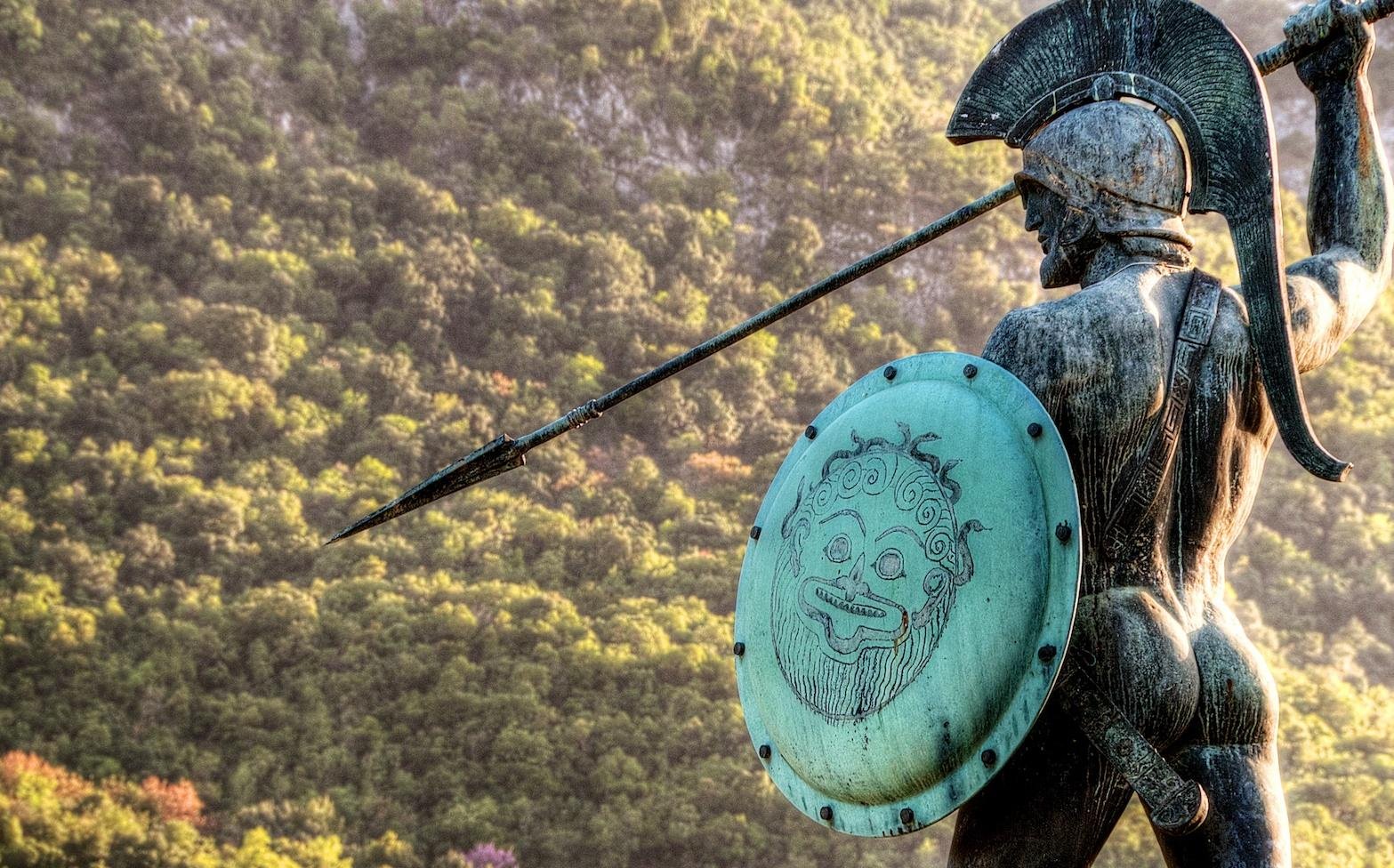
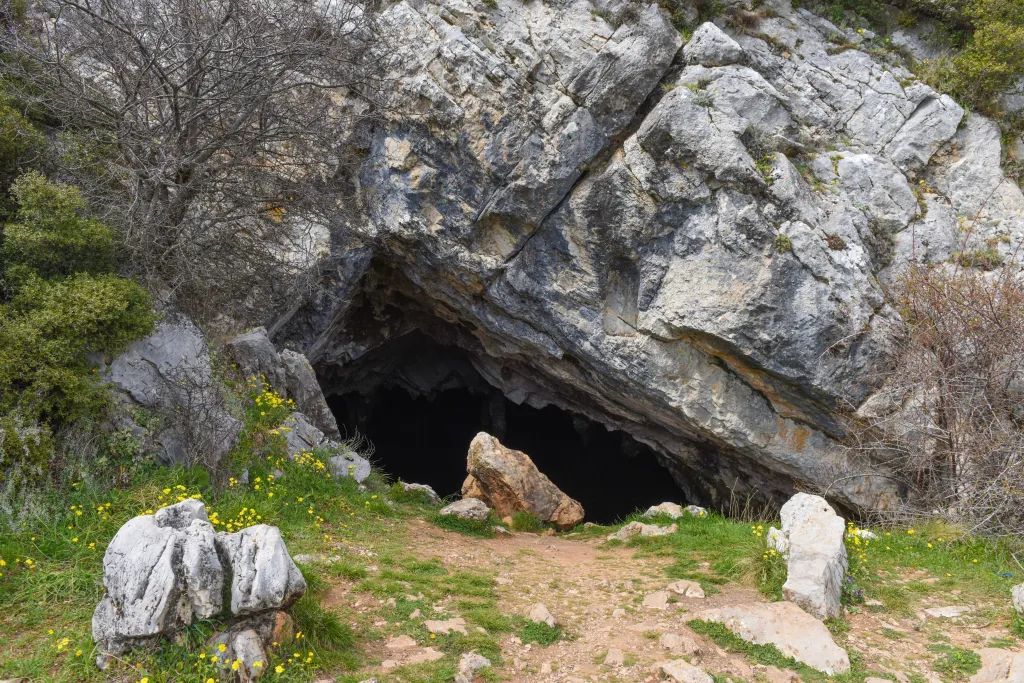
Full-day journey through ancient Greek landmarks including the oracle of Delphi, a 4000 BC cave, and the site of the legendary Spartan stand
10 hours
Free Cancellation
Journey to ancient Greece's most sacred oracle site with flexible private transport and expert drivers
9 - 13 hours
Free Cancellation
Journey to the Oracle's ancient sanctuary with a local expert—just your group, your pace, your day.
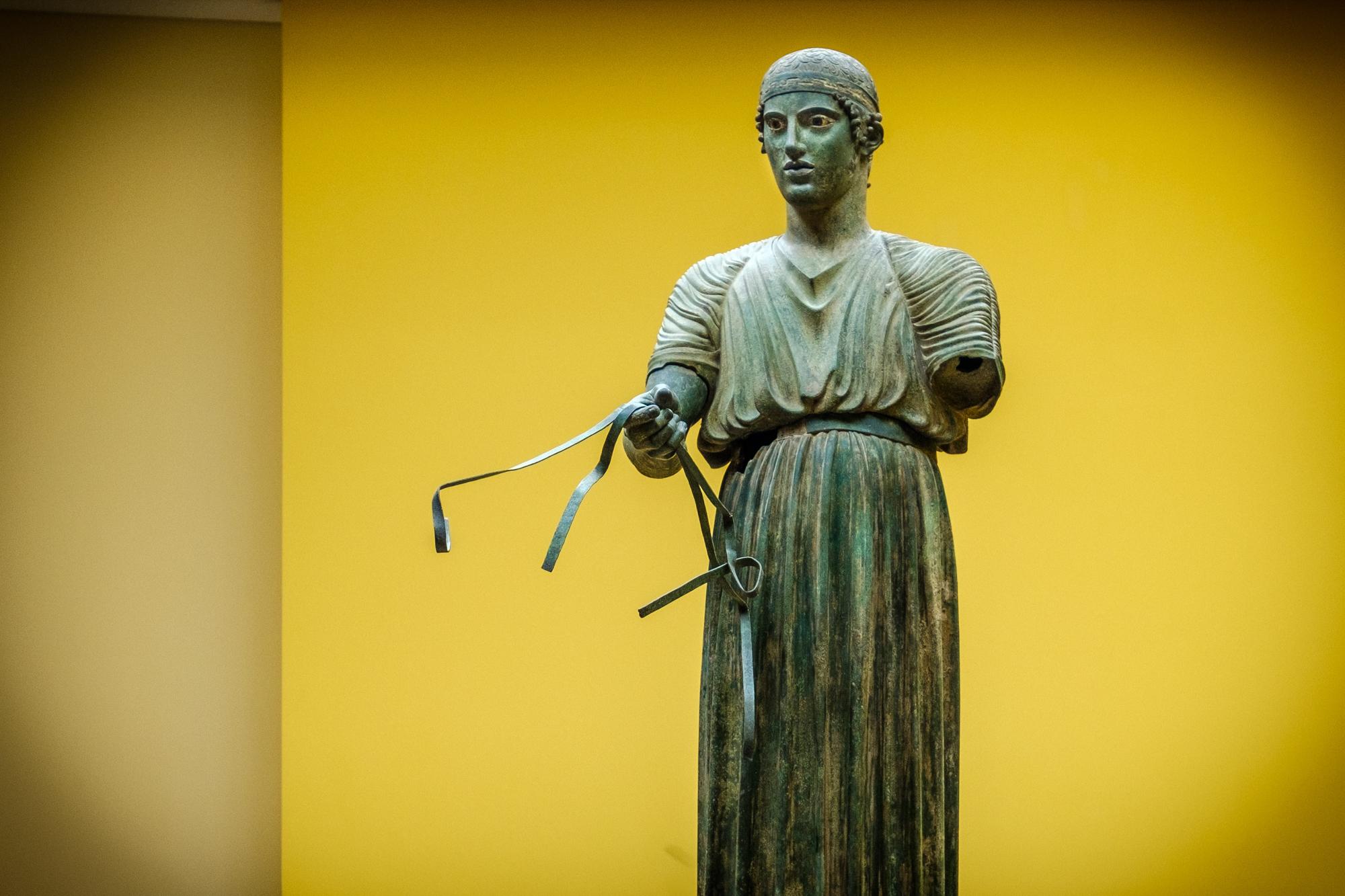
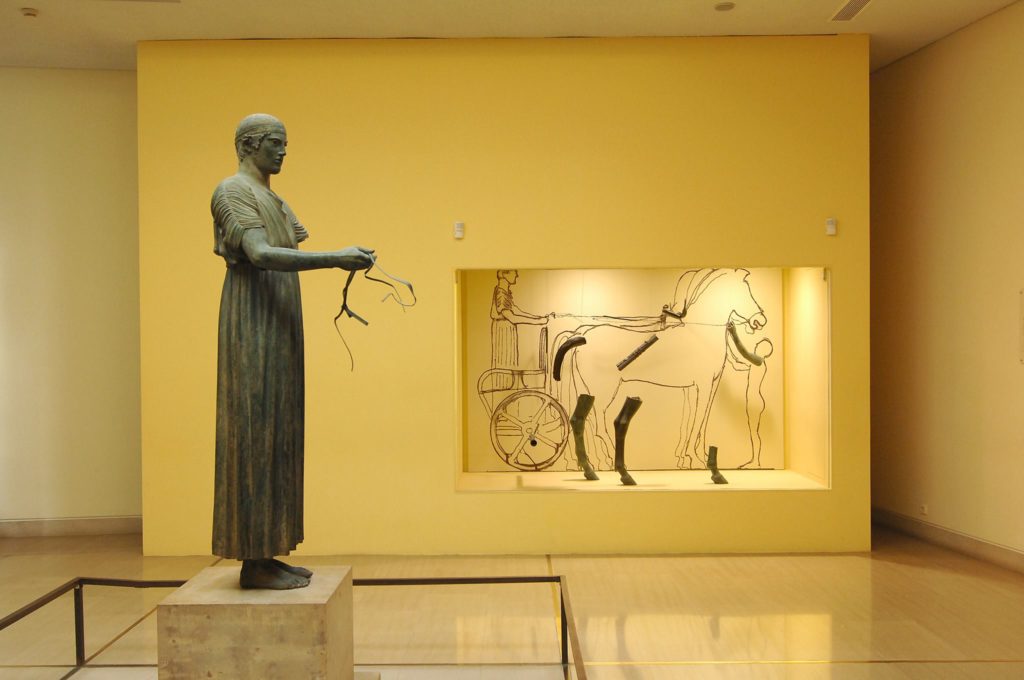
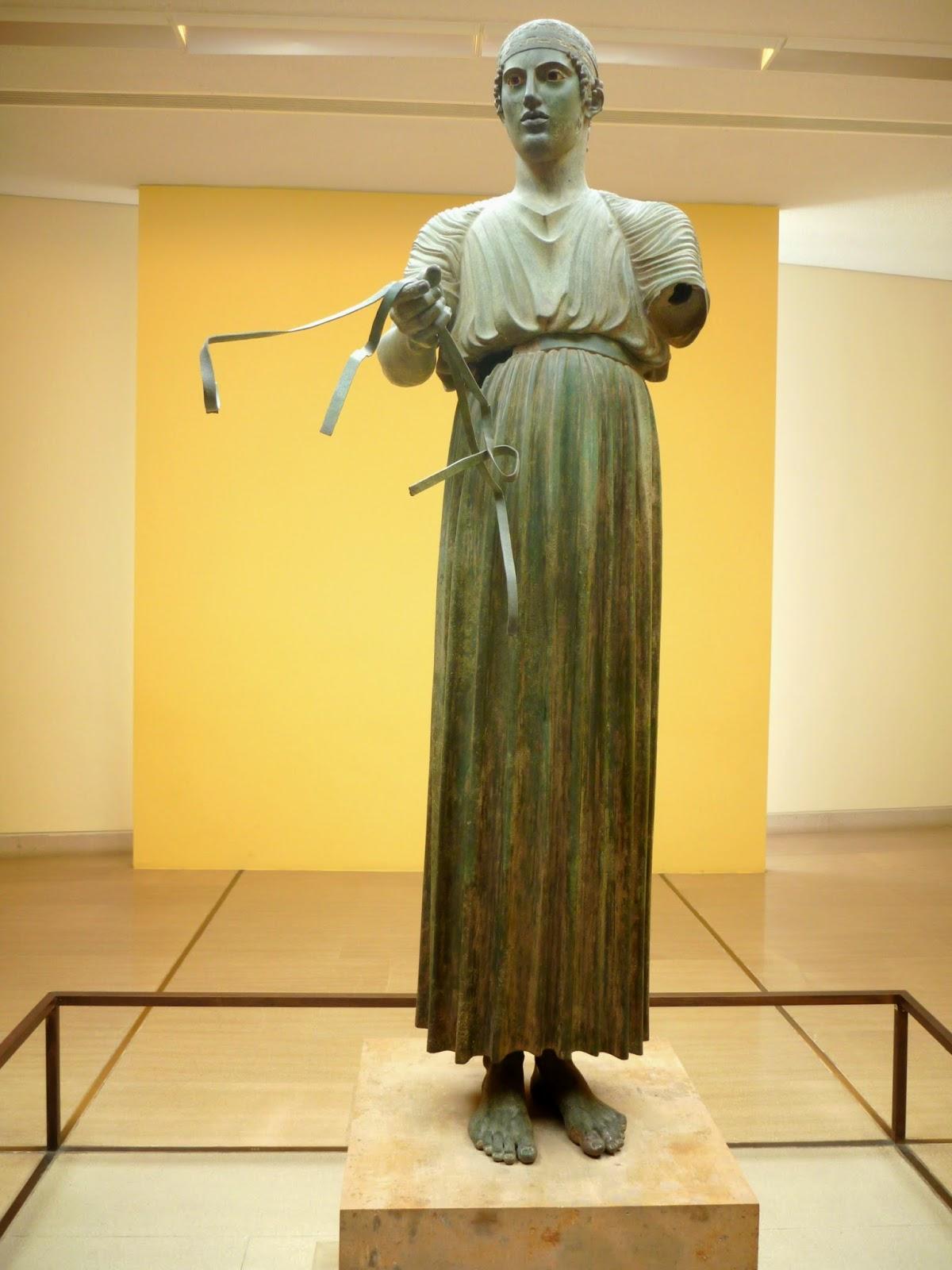
Explore the famous Charioteer of Delphi
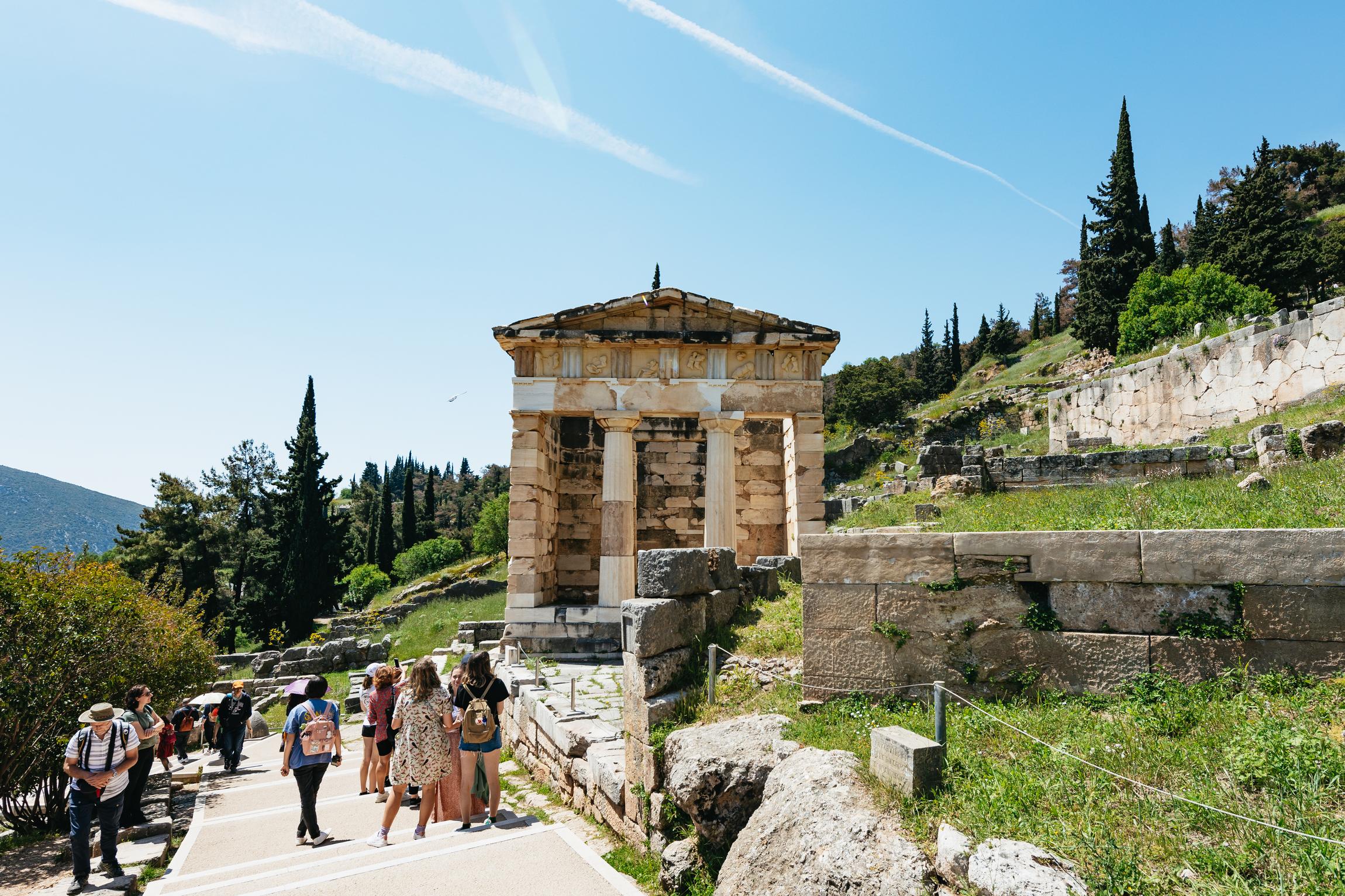
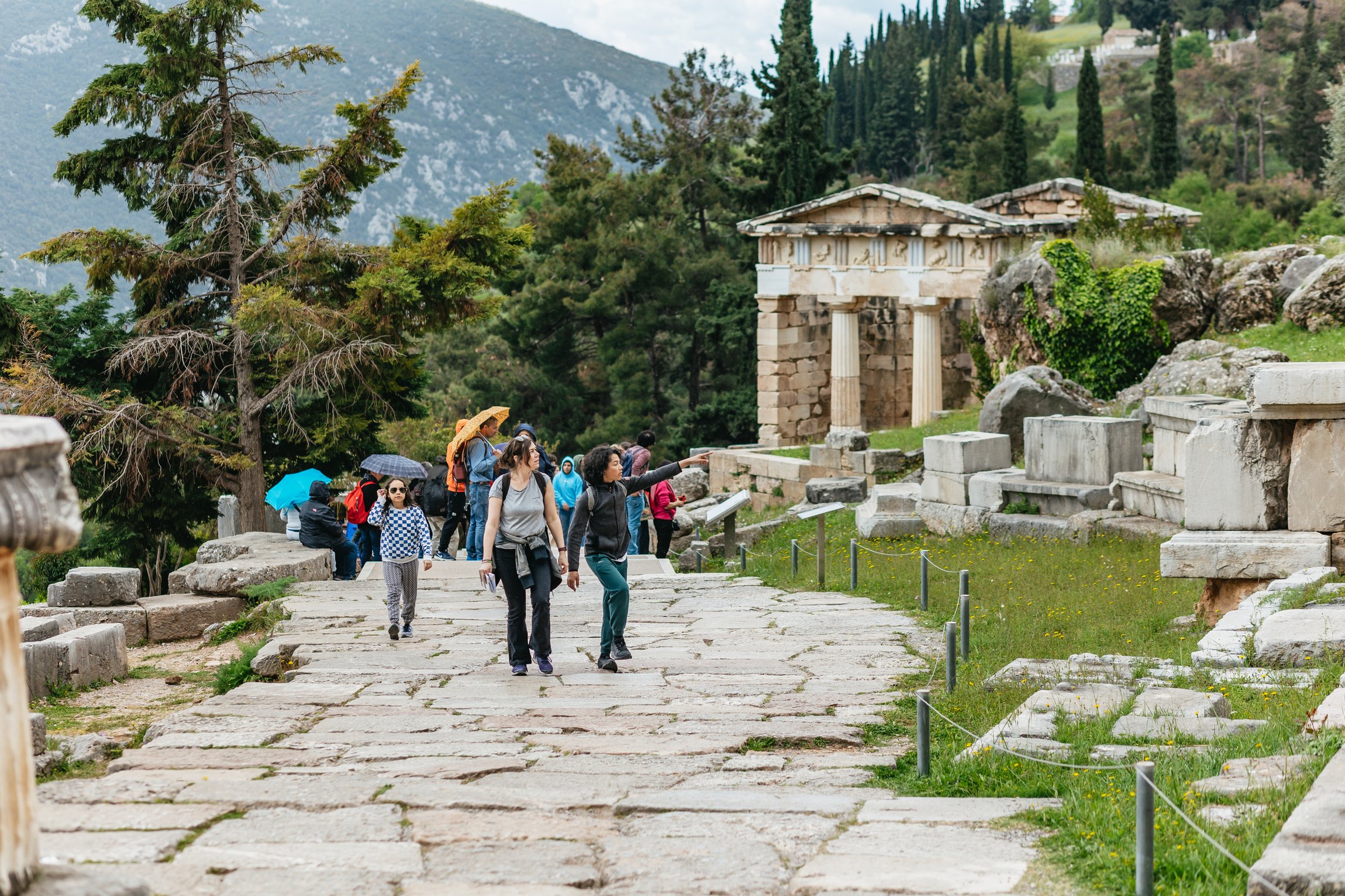
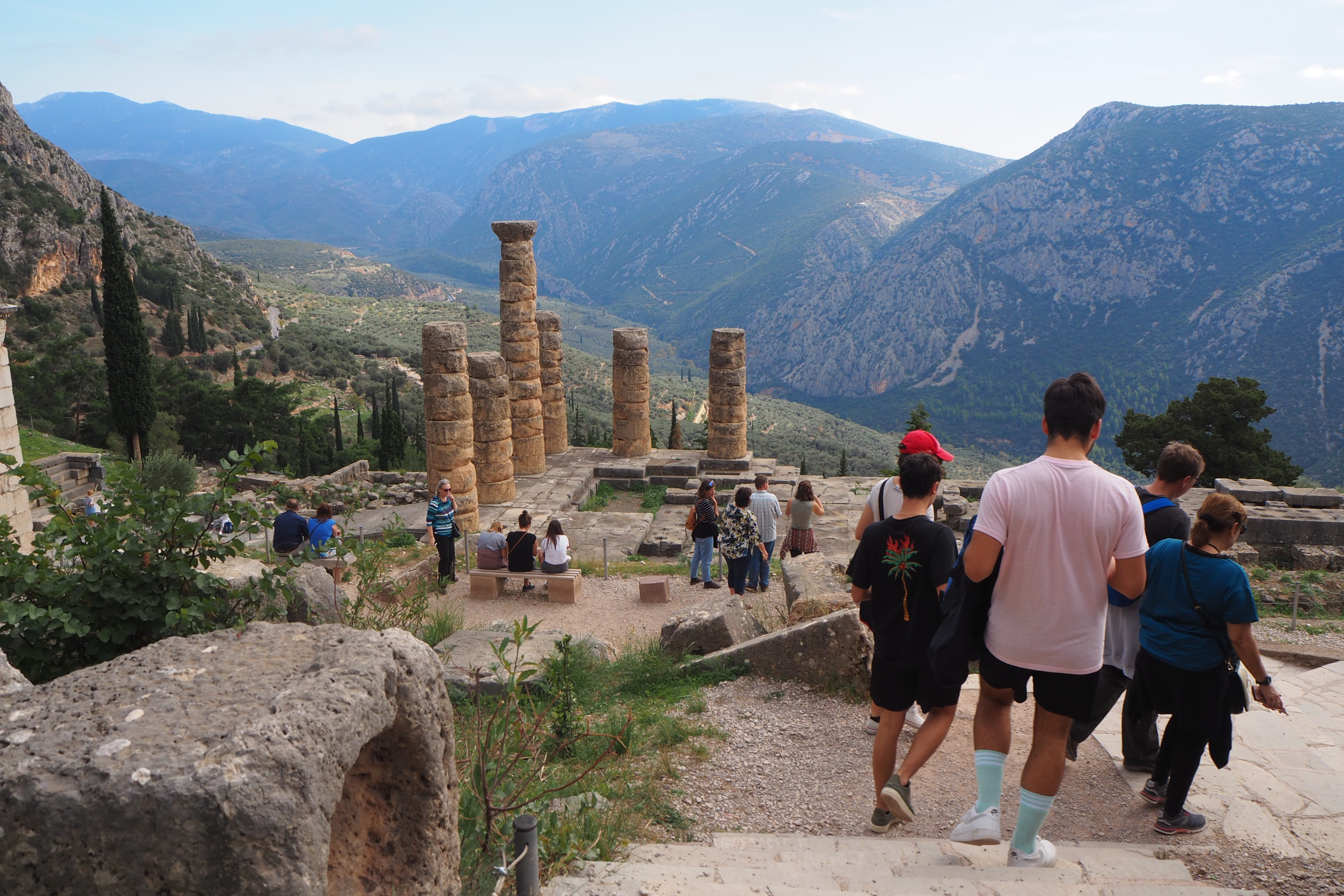
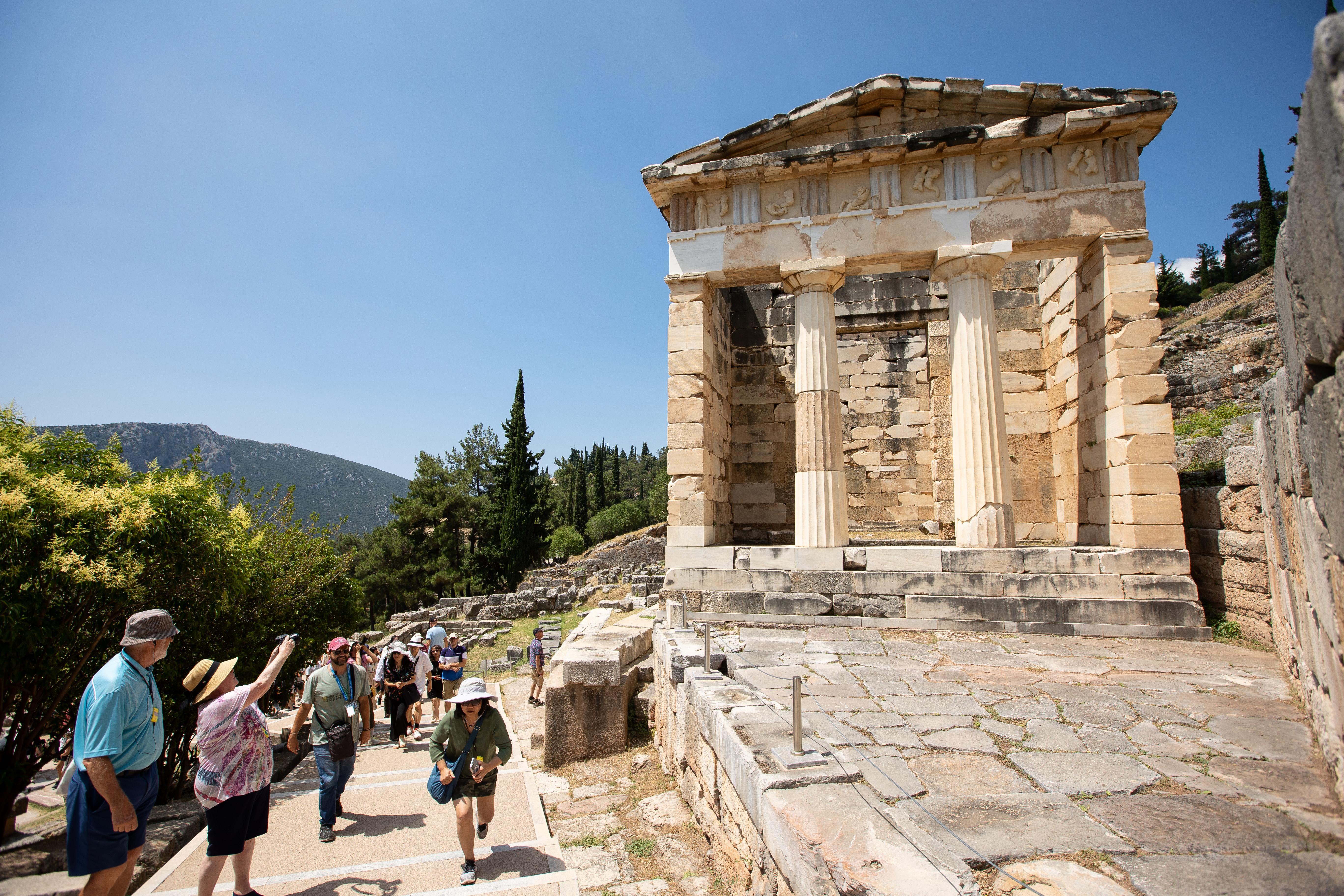
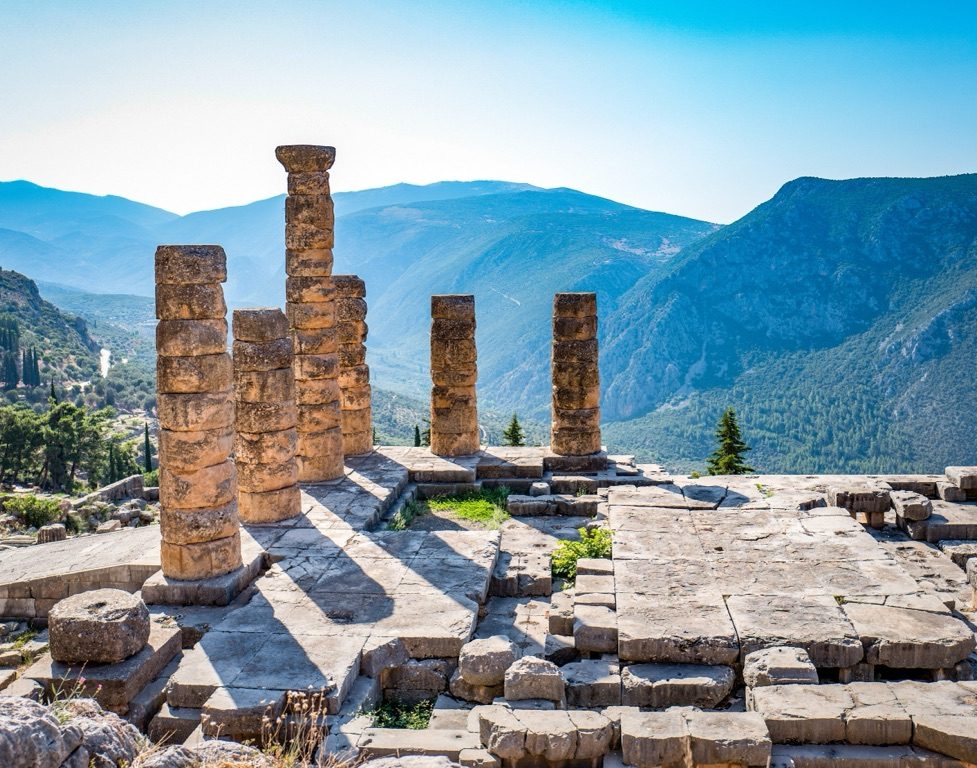
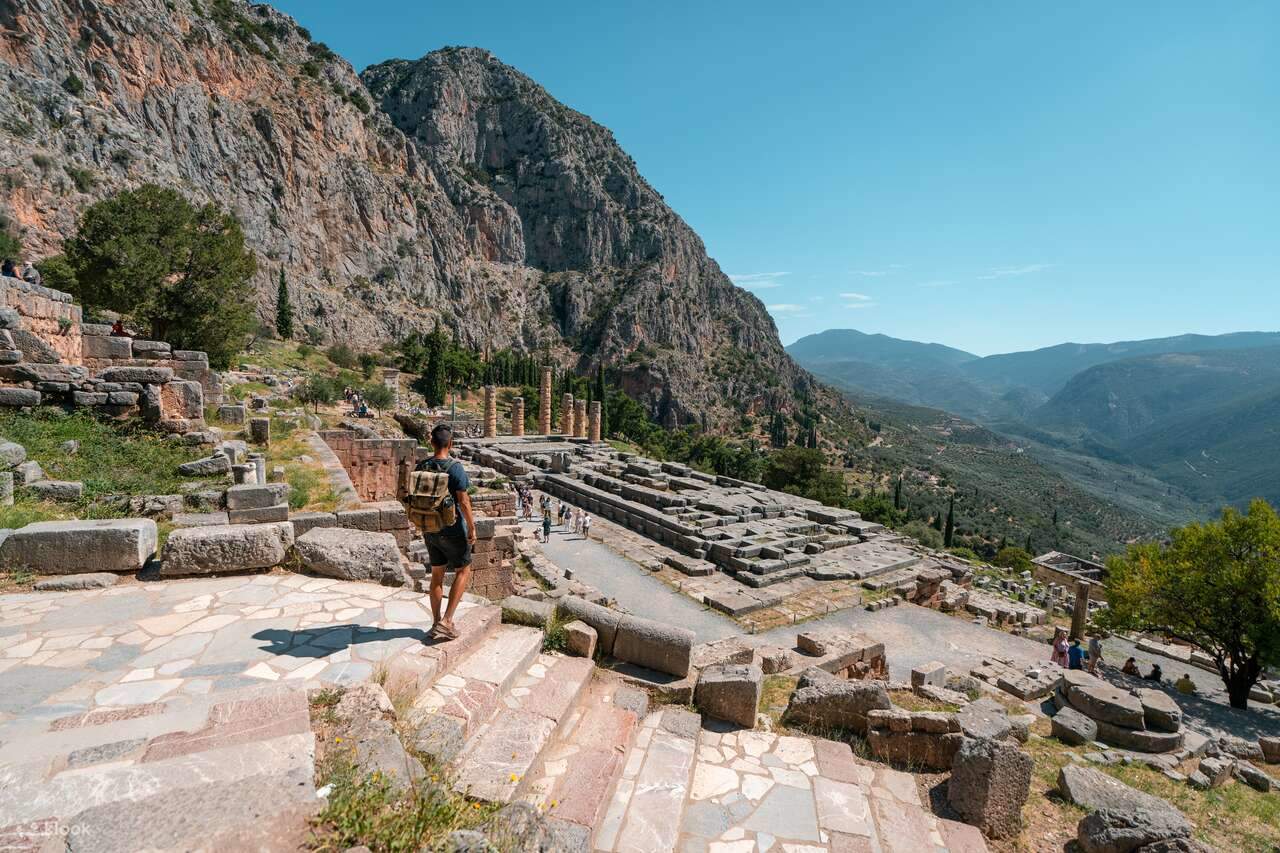
Ascend the Sacred Way to the Temple of Apollo
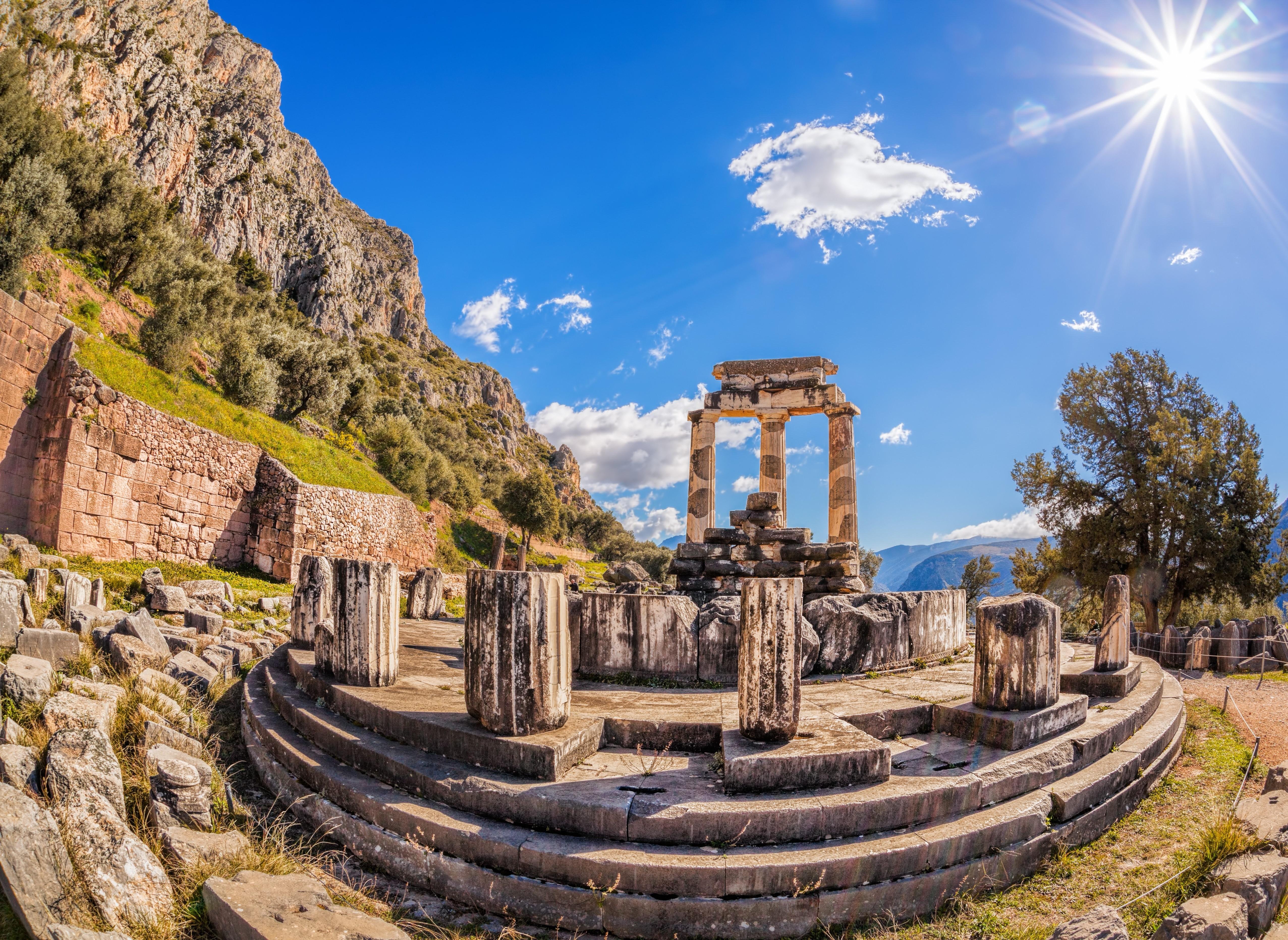
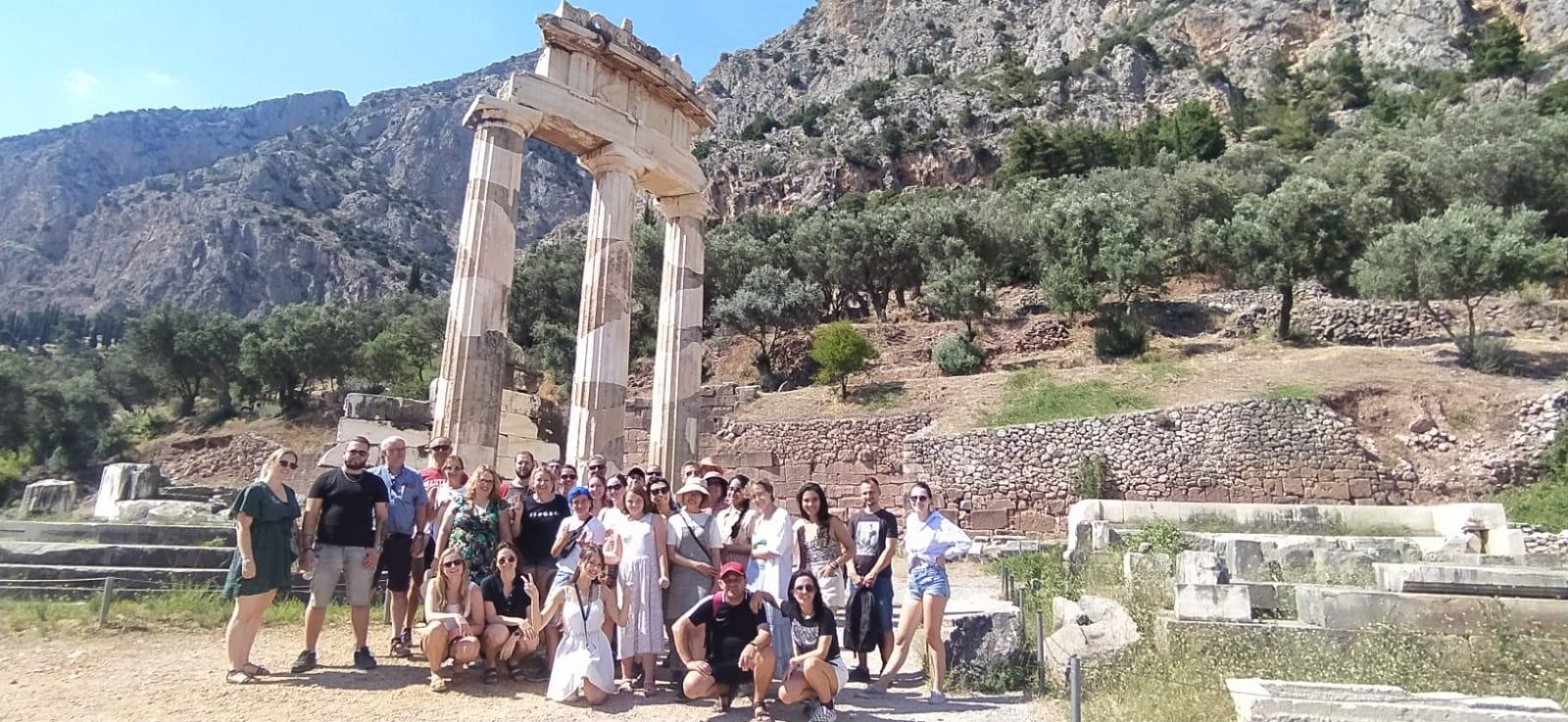
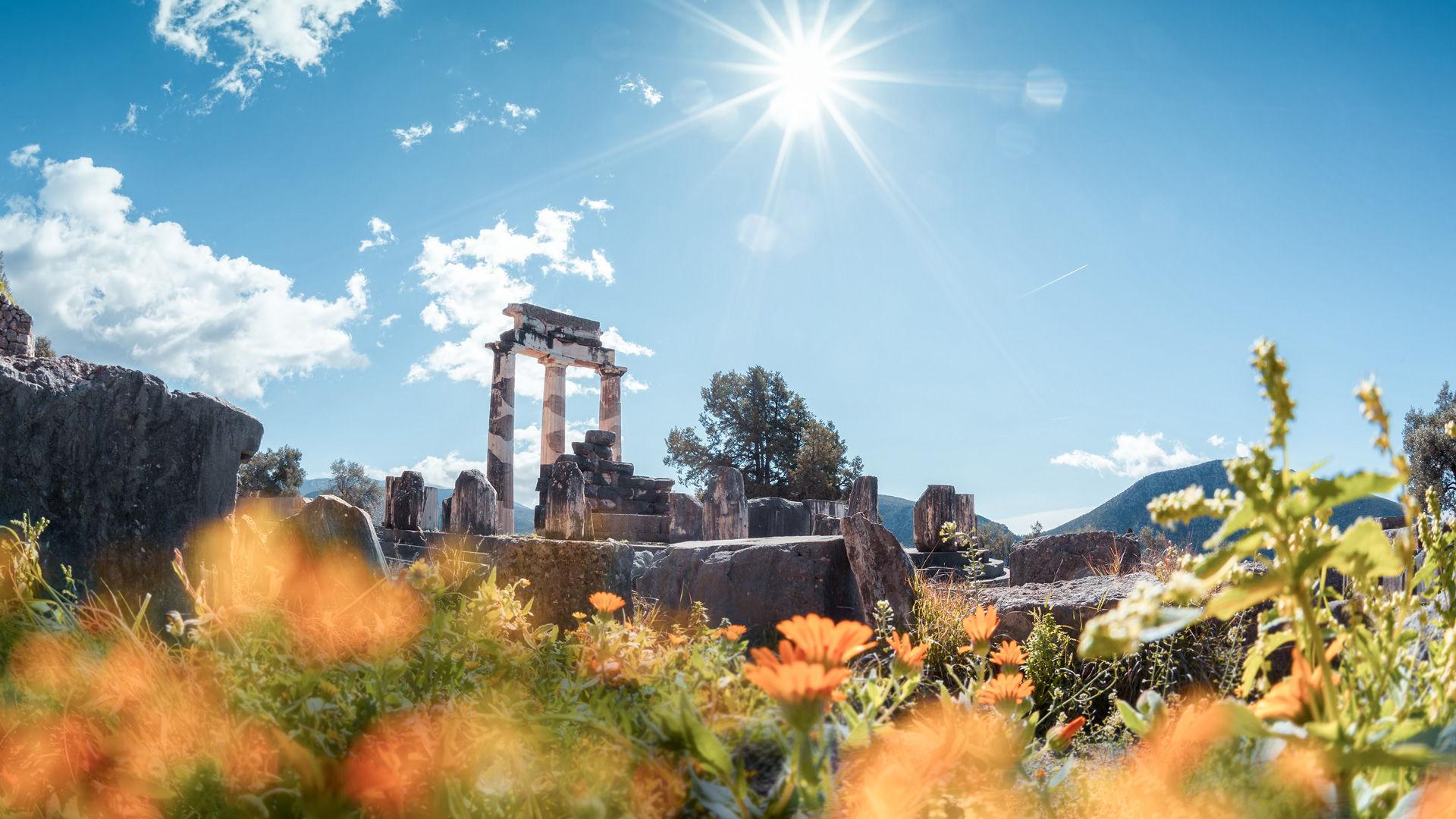
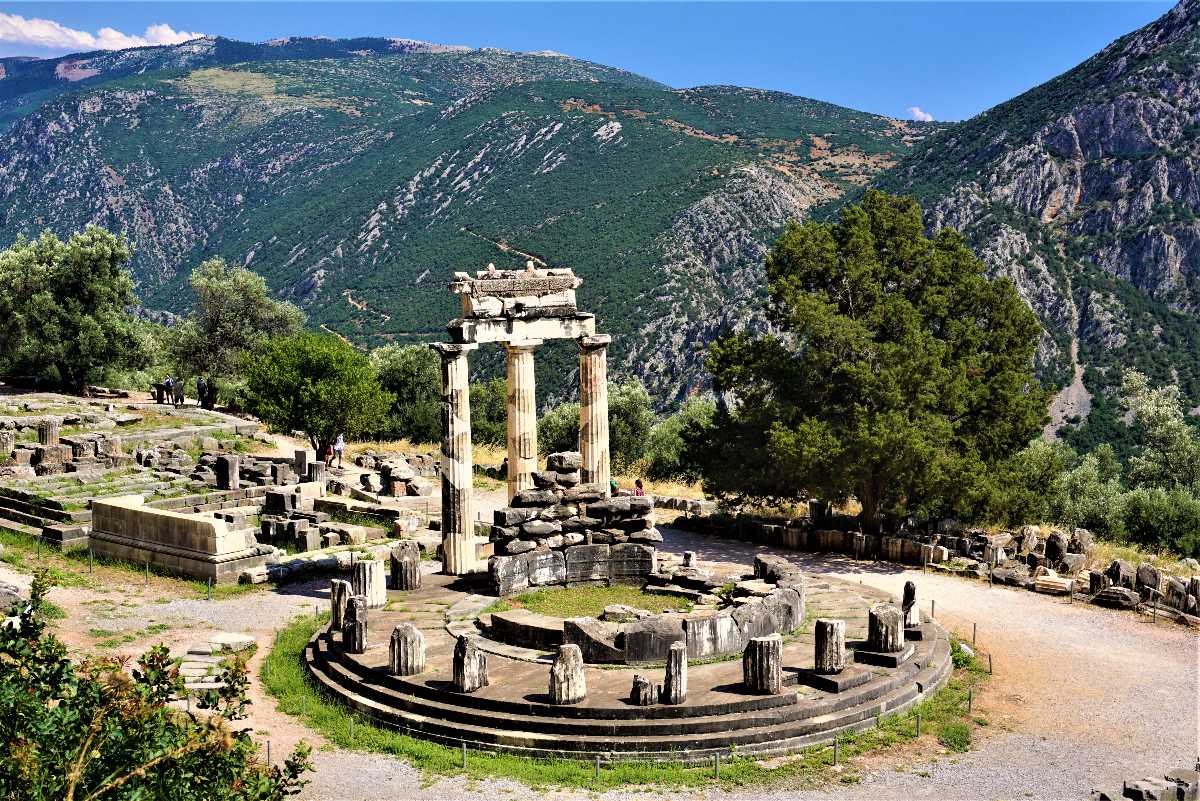
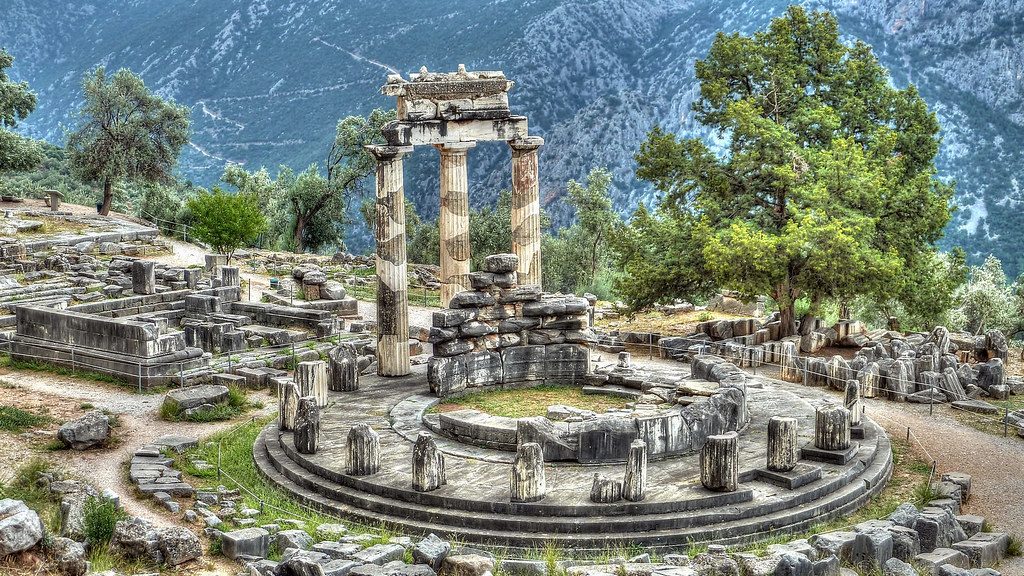
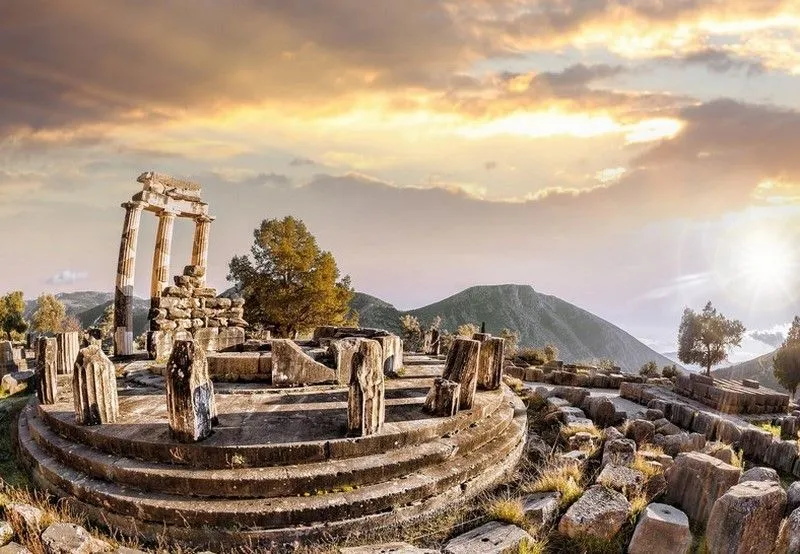
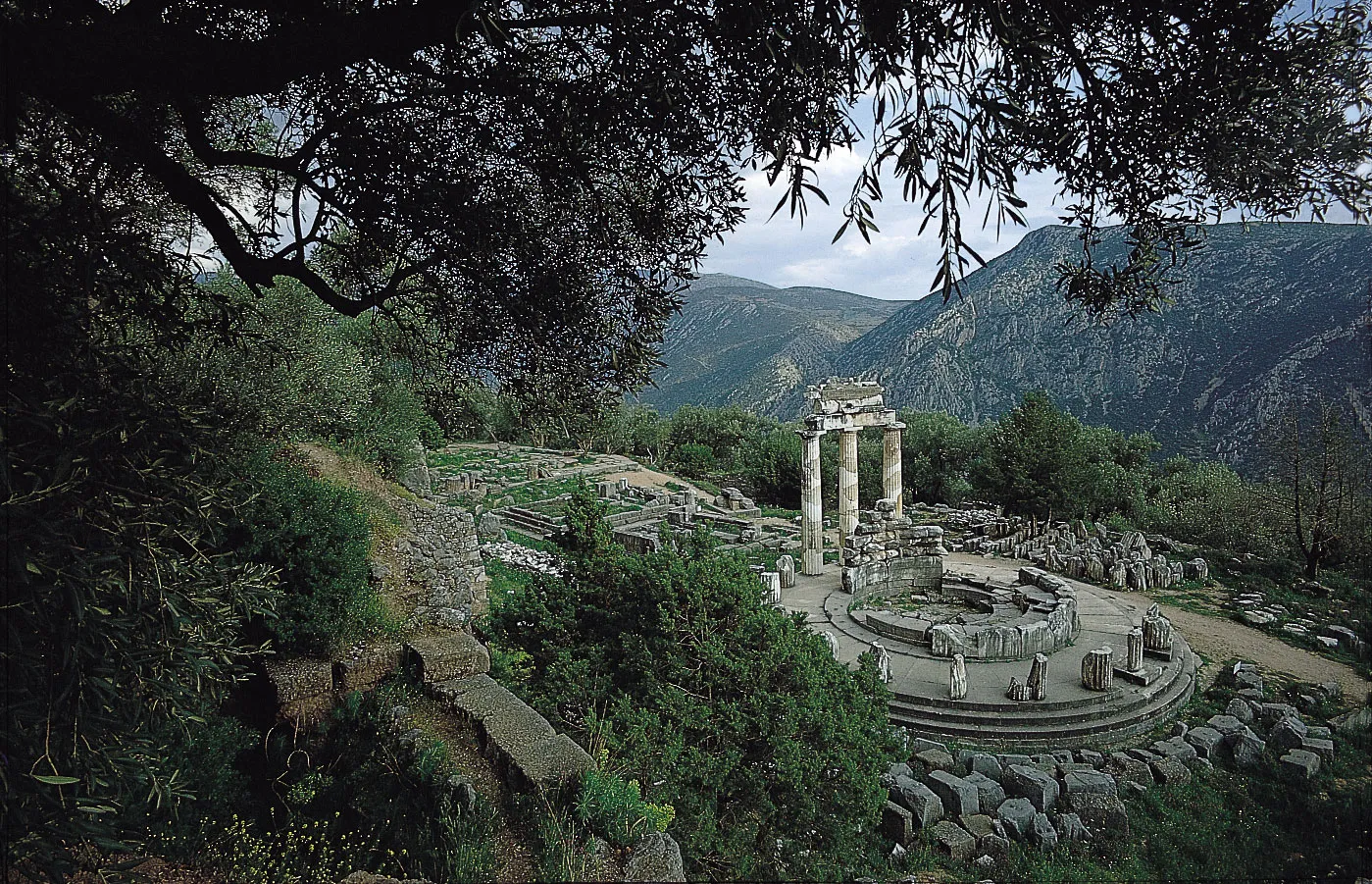
Visit the iconic circular structure at Athena Pronaia
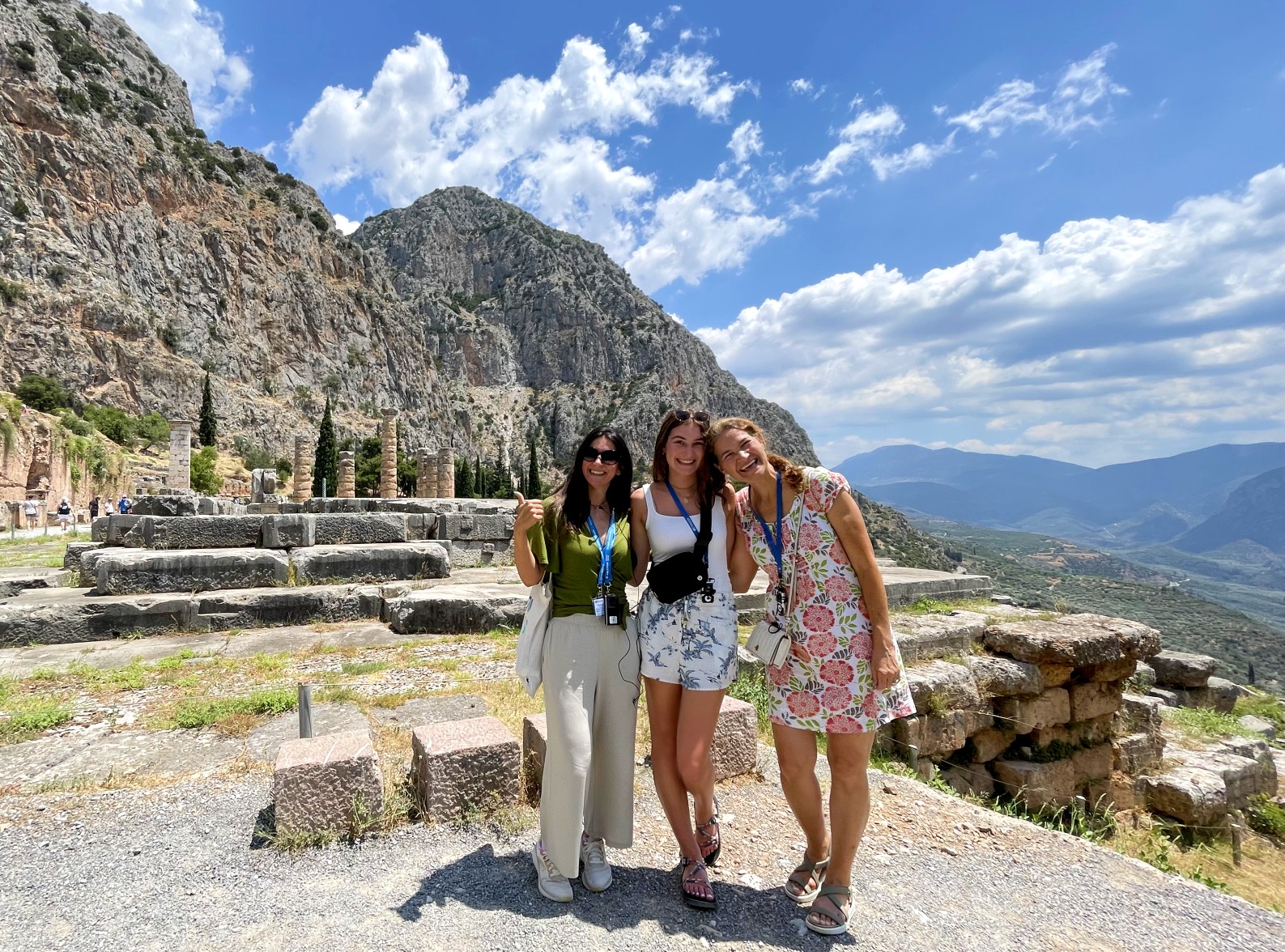
Ancient columns against mountain background
Stone path leading uphill
Iconic circular marble structure
Detailed bronze statue face
Marble sphinx in museum gallery
You depart Athens before eight, crossing the Boeotian agricultural plain as the highway climbs toward Parnassus foothills.
The coach parks in Delphi's lower lot at ten-thirty, and you walk 400 metres uphill to the site entrance, passing the Castalian Spring ravine where pilgrims once purified themselves in mountain runoff. Your guide leads you through the Sacred Way's zigzag ramps, stone treads worn smooth by two millennia of pilgrim traffic, pointing out foundation lines where Persian and Athenian treasuries once stood.
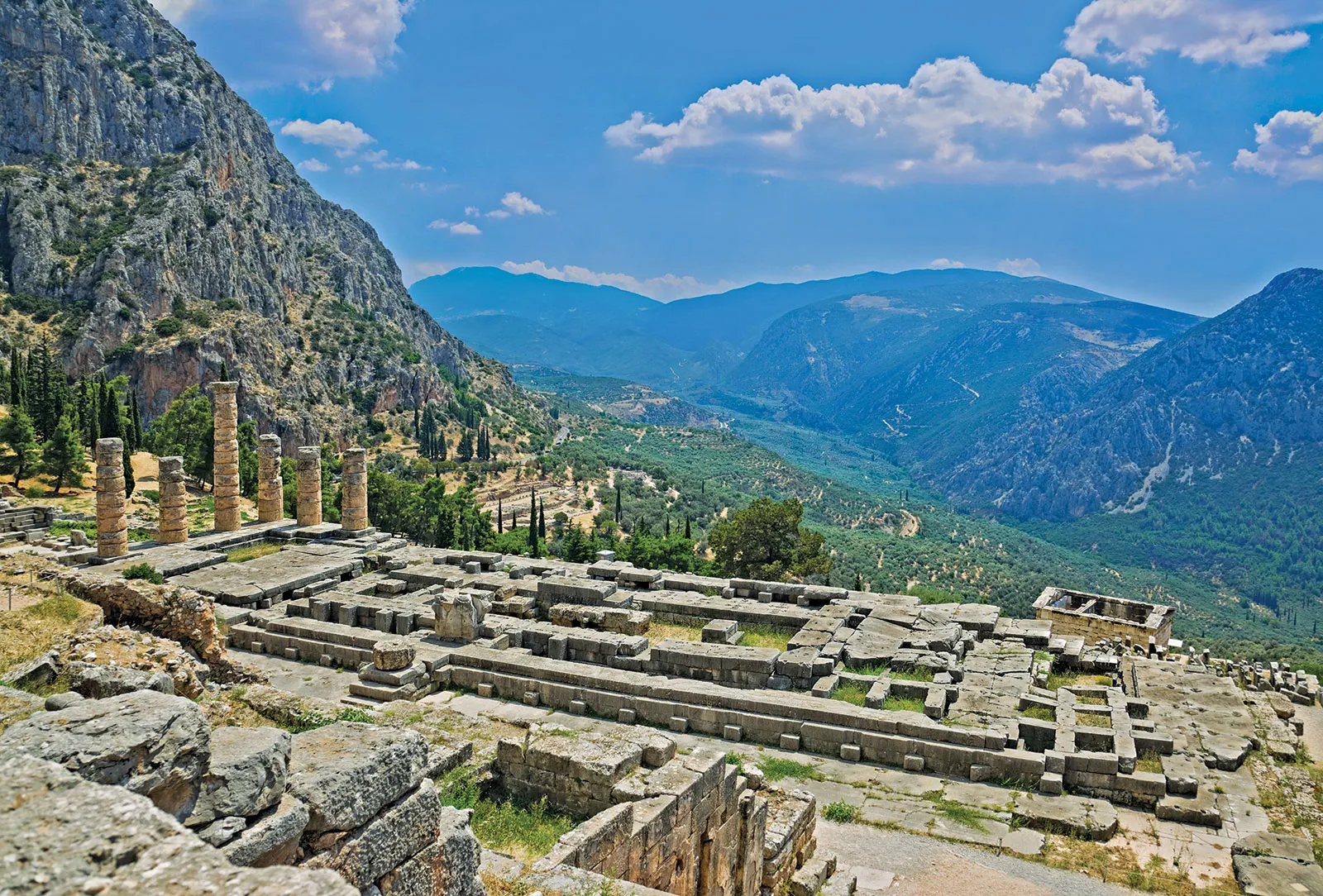
You reach the Temple of Apollo platform at 550 metres elevation, six reconstructed columns framing the Pleistos valley's olive groves 200 metres below. The theatre's 35 tiers rise directly behind the temple, and you climb to the uppermost bench for a sightline that includes the gymnasium terrace and the Gulf of Itea shimmering 15 kilometres south. The stadium occupies the sanctuary's highest terrace, its U-shaped track carved into bedrock with stone starting blocks still anchored at the 177-metre sprint line.
You descend to the museum at noon, where the Charioteer of Delphi stands in a climate-controlled hall — bronze eyelashes intact, his left arm extended in a grip that once held leather reins. The Sphinx of Naxos room displays the marble creature's 2.3-metre wings, and you study the inscription listing victors of Pythian Games chariot races from 582 BCE onward. By one o'clock you're in Arachova for lunch, the mountain village 12 kilometres east offering tavernas with views of Parnassus ski runs before the return drive to Athens.
All the details about your upcoming adventure in one place
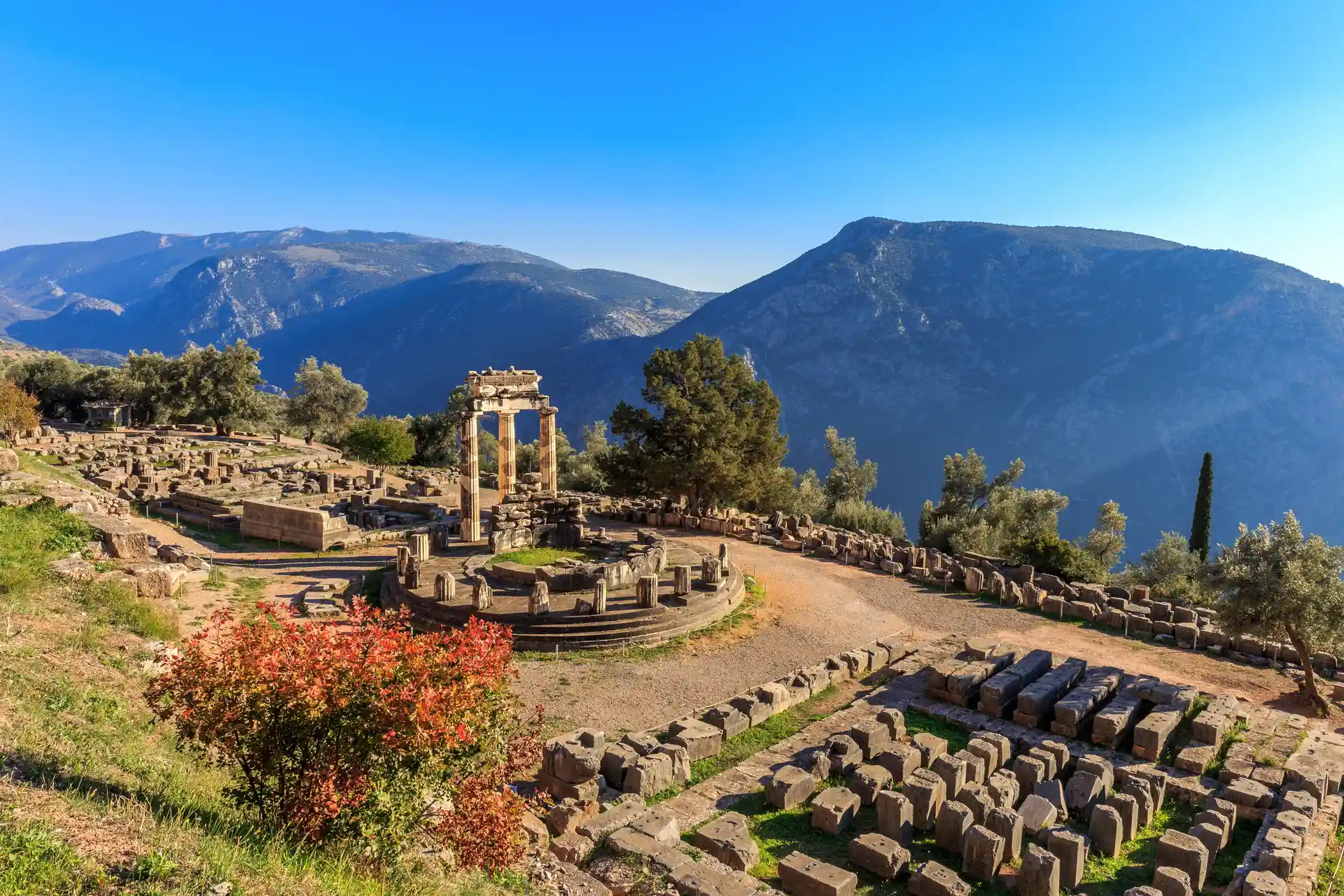
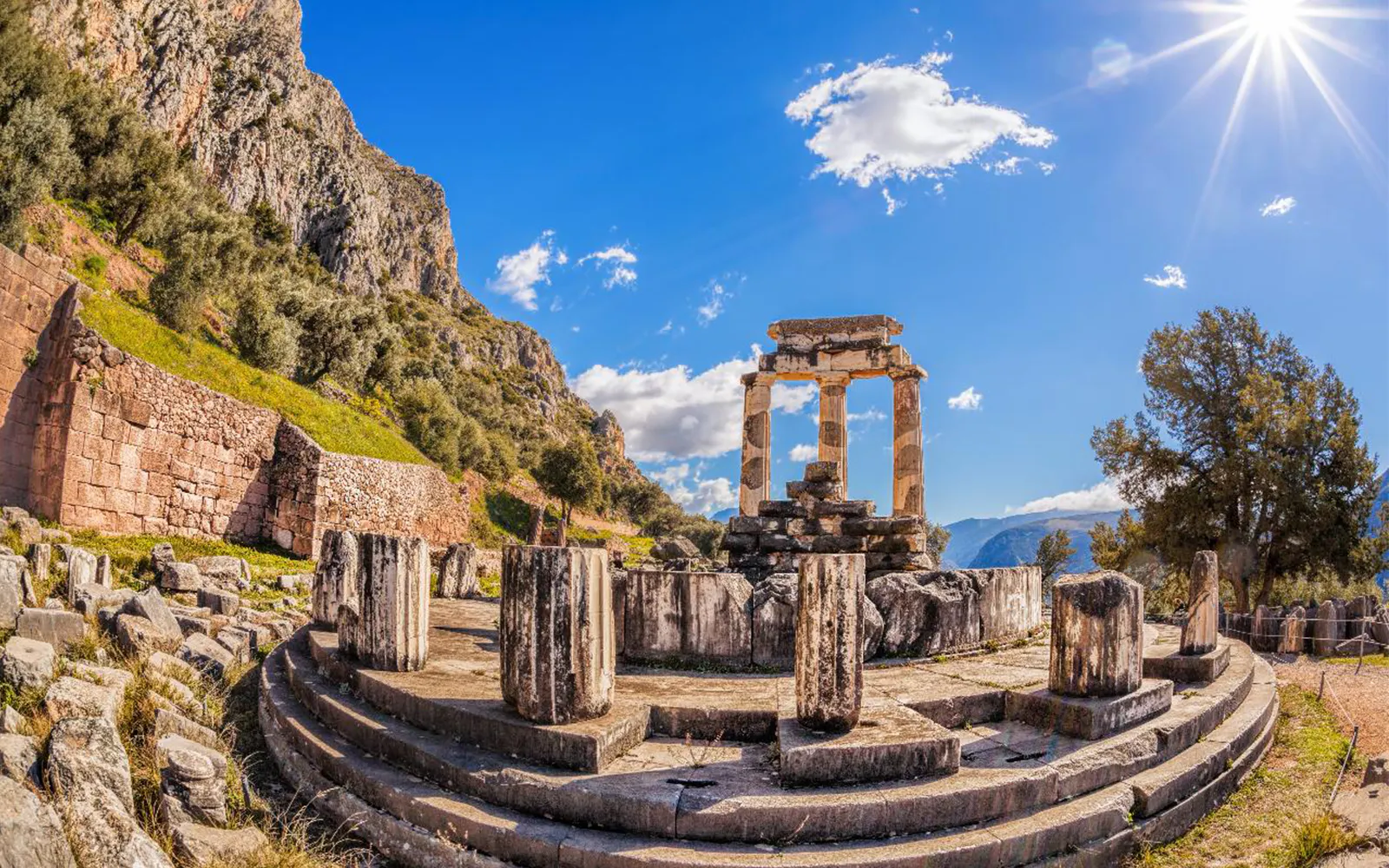
The Tholos of Athena Pronaia — a fourth-century circular temple with twenty Doric columns — sits on a terrace 800 metres below the main sanctuary, an architectural puzzle scholars reconstructed from fragments scattered across the ravine by earthquakes in 373 BCE. Delphi's location was not accidental.
Ancient engineers carved the Sacred Way into Parnassus limestone at 550 metres elevation, where two geological faults converge and ethylene gas once rose through fissures, a natural phenomenon the Pythia channeled into prophecy. The site controlled a critical mountain pass linking Boeotia to the Gulf of Corinth, and by the sixth century BCE its Oracle influenced military campaigns from Croesus of Lydia to Philip II of Macedon.
The archaeological museum holds bronze charioteer fragments cast in 478 BCE, their inlaid eyes and copper lips preserved through burial in a rockslide. The sanctuary operated for a thousand years before Emperor Theodosius closed pagan temples in 393 CE, but its physical decline began two centuries earlier when Nero looted 500 statues and Constantine relocated treasuries to his new capital. Modern excavations, which removed the village of Kastri stone by stone between 1892 and 1903, exposed the theatre's 35 limestone tiers and the stadium track where Pythian Games contestants sprinted 177 metres every four years.
Today the site spans 30 hectares of terraced ruins. The Temple of Apollo foundation measures 60 by 23 metres, its six surviving columns re-erected in 1938 using anastylosis — matching original drums to their ancient positions through chisel marks and weathering patterns. The polygonal retaining wall below the temple, constructed without mortar from interlocking limestone blocks in the sixth century BCE, stretches 90 metres and bears more than 800 inscribed manumission decrees freeing enslaved people. Morning light strikes the Phaedriades cliffs — twin 230-metre limestone faces that frame the sanctuary — at an angle that illuminates the theatre and gymnasium simultaneously, a visual effect architects exploited when orienting the Sacred Way.
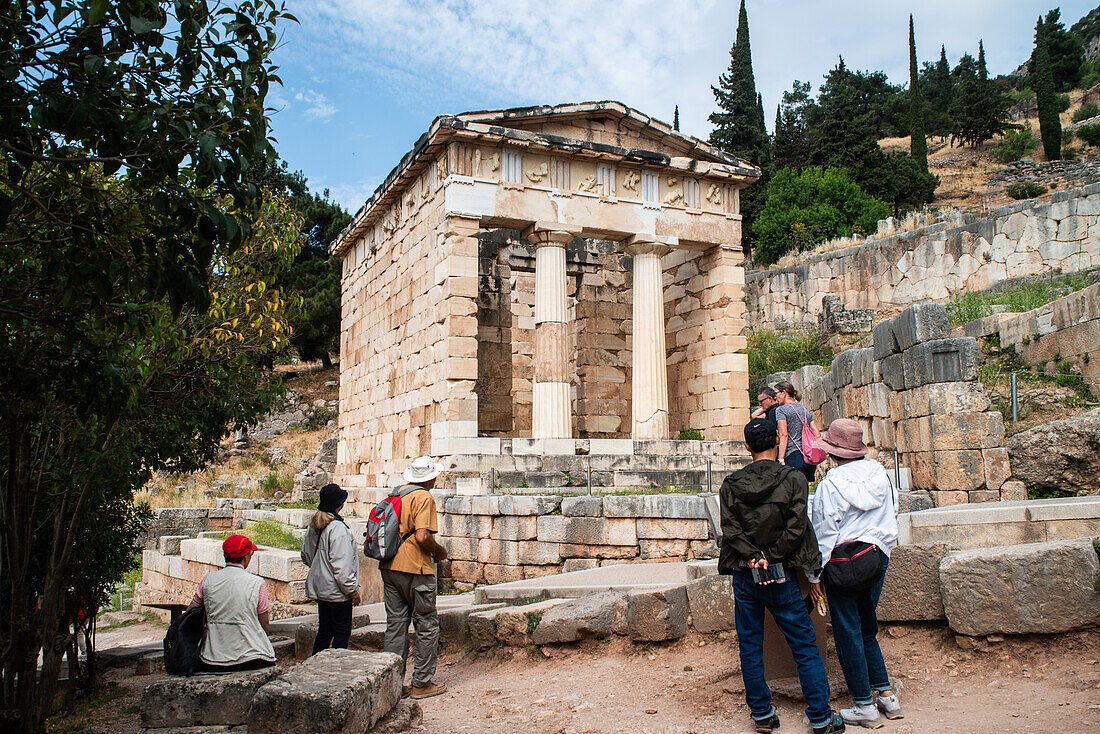
Delphi day tours from Athens navigate 180 kilometres of mountain highway in approximately two and a half hours, crossing the Boeotian plain and ascending through Arachova's stone villages. Group excursions include the archaeological zone and museum under a combined 20-euro conservation fee, with guided walks covering the Treasury of the Athenians — a marble monument reconstructed from 8,000 catalogued fragments — and the Castalian Spring where pilgrims performed ritual ablutions in water channeled from Parnassus snowmelt.

The polygonal wall bears more than 800 inscribed decrees freeing enslaved people, a legal archive carved into interlocking limestone.
Wear comfortable walking shoes suitable for uneven, rocky paths found throughout the Delphi archaeological site. Modest clothing is recommended when visiting nearby monastic sites or religious areas.
Small daypacks are permitted, but large luggage should be left on your transport vehicle. Security checks may be conducted at the main entrance gate.
Personal photography is allowed throughout the outdoor archaeological site and the museum. Tripods and professional equipment require prior written authorization from the archaeological service.
The site is educational for older children interested in mythology, though the terrain is difficult for strollers. Bringing a carrier is highly advised for families booking delphi day tours from athens.
The lower part of the site is partially accessible, but the steep incline toward the Temple of Apollo presents significant challenges for visitors with limited mobility. The archaeological museum provides better accessibility for wheelchair users.
Water bottles are essential for the walk, as there are limited shaded areas near the ruins. Food and beverages are strictly prohibited inside the archaeological museum.
Opening Hours
08:00–20:00 (See weekly details)
Address
Delphi 330 54, Greece
Accessibility
Partial terrain access
Best arrival window
08:00–10:00
Site Access
Includes archaeological site and museum
Bus · 3 hours · Standard ticket price applies
KTEL bus from Athens Liosion terminal to Delphi
Car · 2.5 hours · Toll road fees apply
National Road Athens-Lamia via Kastro turnoff
Full refunds are typically provided for cancellations made at least 24 hours in advance of the scheduled service. The standard entrance fee of 20 EUR is included in most packages but may be subject to specific operator terms.
Recommended time
4-5 hours
Most delphi day tours from athens require at least four hours to fully experience the archaeological sanctuary and the adjacent museum. Arriving within the 08:00–10:00 window helps visitors bypass the largest excursion groups while maintaining a comfortable pace. Those holding delphi day tours from athens tickets often find that an early start leaves time to explore the Tholos of Athena, whereas a midday arrival necessitates longer waits at the entrance. Booking a structured delphi day tours from athens tour allows you to maximize your time at this UNESCO heritage landmark before the afternoon heat peaks.
Crowd levels through the day
Weather · crowds · average price — dots go green to amber to red as each metric rises.
Mild temperatures and blooming flowers create an ideal environment for walking the trails. Expect larger crowds during the Easter period.
High temperatures necessitate an early start. Focus on the museum during peak afternoon hours.
Pleasant weather with clear skies makes this an excellent season for photography. Reduced crowds compared to the summer peak.
Cooler weather with occasional rain, but the site remains quiet. This is the best time for a serene visit.
Carry extra water, as the climb up the Sacred Way is physically demanding. There are few water fountains located within the main archaeological enclosure.
Book delphi day tours from athens to gain deeper insights into the Oracle history. Expert guides navigate the site layout more efficiently than solo visitors.
The site lacks significant shade, making hats and sunscreen mandatory even in early autumn. Avoid mid-day sun to stay comfortable.
Arrive exactly at the 08:00 opening window to see the monuments before the largest buses arrive. This ensures a calmer experience at the Temple of Apollo.
Keep your 20 EUR ticket safe, as it provides entrance to both the museum and the archaeological site. Re-entry may not be permitted without valid documentation.
Varies
Pick-up included in specific premium delphi day tours from athens
Get directionsThe sanctuary at Delphi emerged in the eighth century BCE as a cult site dedicated to Apollo, replacing earlier worship of Gaia. By 582 BCE the Pythian Games were established, transforming Delphi into a Panhellenic center rivaling Olympia. The oracle's influence peaked between the sixth and fourth centuries BCE, when city-states and foreign rulers consulted the Pythia before wars, colonization, and constitutional reforms. Croesus of Lydia famously tested the oracle in 560 BCE, receiving cryptic prophecy that led to his kingdom's destruction. The priestess inhaled vapors rising from a chasm beneath the Temple of Apollo, entering a trance state modern geologists attribute to ethylene gas seeping through limestone faults. Her utterances were interpreted by male priests into hexameter verse, creating a deliberate ambiguity that protected the oracle's reputation regardless of outcomes. Philip II of Macedon seized control of the sanctuary in 346 BCE after the Third Sacred War, ending Phocian occupation and asserting Macedonian dominance over Greek religious life. Roman generals began consulting Delphi after 191 BCE, though Sulla plundered the sanctuary's treasuries in 86 BCE to fund his civil war. Emperor Nero removed five hundred bronze statues in 66 CE, accelerating the site's decline. The oracle issued its final recorded prophecy in 362 CE, telling Emperor Julian that Apollo's laurel had withered and the sacred spring had dried. Theodosius I banned pagan worship in 393 CE, formally closing the sanctuary after nearly a millennium of continuous operation. French archaeologists began systematic excavation in 1892 under Théophile Homolle, relocating the modern village of Kastri to expose the ancient terraces. Today visitors arriving on delphi day tours from athens walk the Sacred Way past reconstructed treasuries, seeing the theater where Pythian victors were crowned and the stadium that hosted athletic contests until the fourth century CE.
Sanctuary of Apollo established, replacing earlier worship of Gaia and marking Delphi's emergence as a religious center
Pythian Games founded, elevating Delphi to Panhellenic status alongside Olympia and creating quadrennial athletic and musical competitions
Croesus of Lydia consults the oracle before war with Persia, receiving ambiguous prophecy that becomes the most famous example of Delphic interpretation
Philip II of Macedon gains control after the Third Sacred War, ending Phocian dominance and asserting Macedonian influence over Greek religious affairs
Roman general Sulla plunders Delphi's treasuries during civil war, removing gold and silver offerings accumulated over centuries
Emperor Theodosius I closes the sanctuary as part of the ban on pagan worship, ending over a thousand years of oracular tradition
French Archaeological School begins excavations under Théophile Homolle, relocating the village to uncover the ancient site
Delphi inscribed as UNESCO World Heritage Site, recognizing its exceptional testimony to ancient Greek civilization and religious practices
Position yourself on the Sacred Way to capture the towering columns against the backdrop of Mount Parnassus. This site is a central highlight for those on delphi day tours from athens.
This reconstructed building offers a clear view of ancient architectural detail and serves as a classic composition for delphi day tours from athens tours.
Located at the lower site, this iconic circular structure provides a unique vantage point away from the main complex crowds seen on a standard delphi day tours from athens tour.
Planning delphi day tours from athens requires preparation for uneven terrain, but the open-air environment offers children space to explore the ancient ruins of this UNESCO World Heritage site.
The archaeological site features steep, uneven paths and many stairs, making strollers impractical for most of the grounds. A sturdy baby carrier is the best way to navigate these Delphi archaeological site routes while keeping your hands free.
The site is well-suited for school-aged children who can manage walking on rocky inclines and have an interest in history. Parents booking delphi day tours from athens tickets should prepare younger children for significant amounts of walking.
There are limited baby-change facilities available within the museum and near the main entrance. We recommend utilizing the museum restrooms before heading out to the outdoor sanctuary areas.
To maximize your experience, aim for the best arrival window of 08:00–10:00 to avoid peak heat and large crowds. This pacing allows families to complete delphi day tours from athens tours at a comfortable speed before the afternoon sun intensifies.
Pack plenty of water and snacks, as options directly within the archaeological site are non-existent. Dining in the modern town of Delphi provides a better variety of meals for families after your tour concludes.
Finding quality meals after enjoying delphi day tours from athens is simple, as the modern town offers numerous tavernas within a short walk from the archaeological site. Most visitors arriving via Delphi day tours from athens tours head to the main street for authentic Greek cuisine before heading back to the capital.
Located on the main road, this spot serves hearty moussaka and grilled meats perfect for groups. It is a reliable choice for those using delphi day tours from athens tickets to explore the sanctuary.
Everything you need to know for your journey
The site is open from 08:00–20:00 most days, though it closes at 17:00 on Tuesdays. Please check the specific daily schedule before departing.
While the museum is accessible, the steep, uneven paths of the main site can be challenging for those with limited mobility. Check with your operator before booking your delphi day tours from athens.
Yes, personal photography is permitted throughout the site and the museum. Tripods require special permission.
The entrance fee is 20 EUR for foreign adults, which includes both the site and the museum. Total costs for delphi day tours from athens will vary based on the provider.
Arriving between 08:00–10:00 is recommended to avoid peak afternoon heat and large crowds. This is the optimal window for a peaceful experience.
No, food and drinks are strictly prohibited inside the museum. You may consume water in the outdoor sections of the sanctuary.
Wear sturdy walking shoes and layered clothing, as the weather can change quickly in the mountains. This is essential for all delphi day tours from athens participants.
Large luggage is generally not permitted inside; please leave heavy bags on your transport vehicle. Small daypacks are allowed.
You can reach the site by car in approximately 2.5 hours or by bus from the Athens Liosion terminal. Many travelers prefer booking dedicated delphi day tours from athens for convenience.
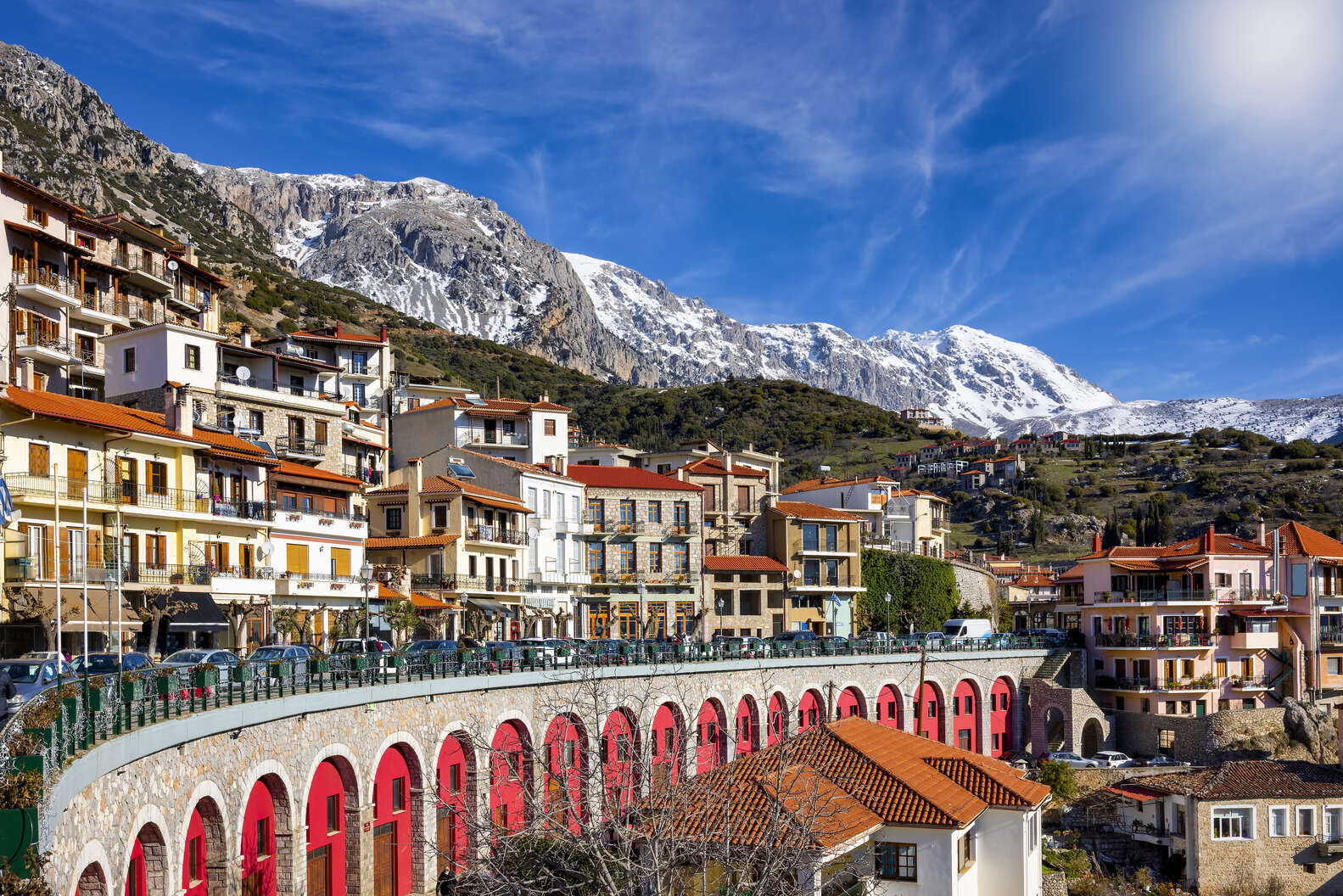
Yes, a trip to Delphi is often combined with visits to the scenic mountain town of Arachova. Many operators include this stop in their standard itinerary.
Houses significant artifacts including the Charioteer and the Sphinx of Naxos
A site of ancient religious worship dedicated to Pan and the Muses
Features the iconic circular Tholos visible from the lower road
A local religious landmark overlooking the valley in nearby Arachova
Features views of the Gulf of Corinth
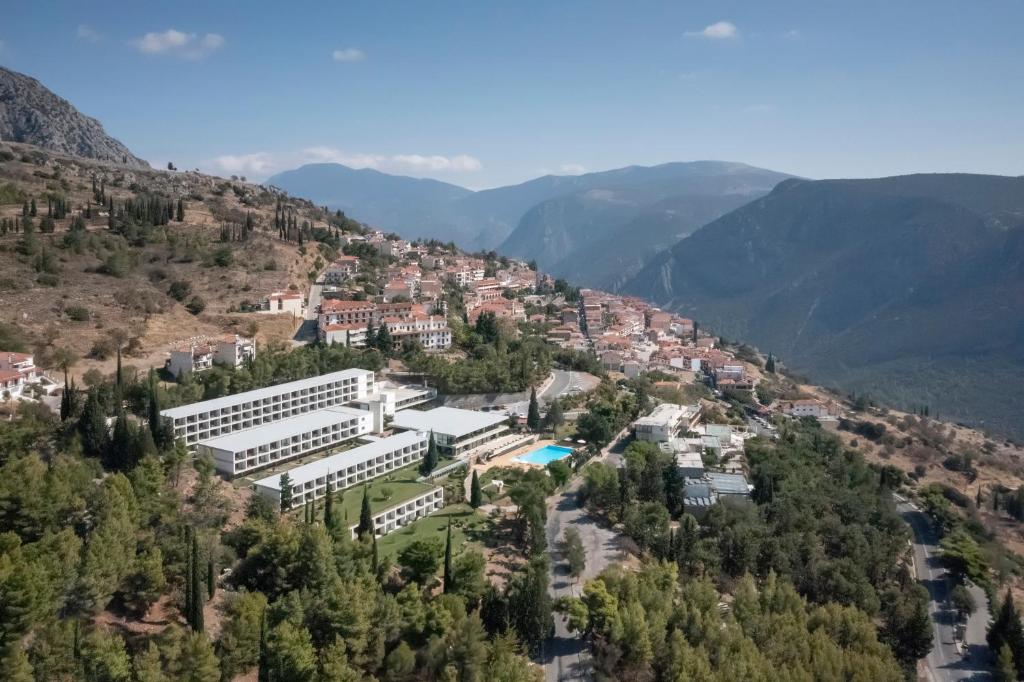
Upscale amenities with mountain views
Traditional stone-built guest houses and tavernas
Join thousands of happy travelers who have discovered this incredible experience
Book Your Experience Now