10 hr
Delphi Mythology Tour with Museum & Arachova Village
- Expert local guide
- Small group
- Skip-the-line access
- Free cancellation
Delphi Tours from Athens — Reserved Entry & Guided Day Trips
Ancient oracle beneath Mount Parnassus, where stone meets sky
Compare fares, pick the fit — all bookings are mobile-voucher and eligible for free cancellation where shown.
10 hr
11 hr
10 hr
| Experience | Duration | Rating | Transfers | Skip-the-line | Guide | Small group | Price | |
|---|---|---|---|---|---|---|---|---|
|
Guided Experience
Most popular
Delphi Mythology Tour with Museum & Arachova Village
|
10 hr | ★ 4.6 | ✓ | ✓ | ✓ | ✓ | €26 | Book → |
|
Guided Experience
Full-Day Delphi Oracle & Archaeological Museum Tour from Athens
|
11 hr | ★ 4.8 | ✓ | ✓ | ✓ | ✓ | €35 | Book → |
|
Guided Experience
Delphi UNESCO Site & Arachova Small-Group Day Trip from Athens
|
10 hr | ★ 4.8 | ✓ | ✓ | ✓ | ✓ | €39 | Book → |
Worth it for history and archaeology enthusiasts
Delphi tours from athens deliver substantial cultural value despite the three-hour drive each way. The 20 EUR entrance fee grants access to both the archaeological site—where the ancient Oracle once counseled kings and city-states—and the museum housing the iconic Charioteer bronze and Sphinx of Naxos. You're paying for one of the most significant sanctuaries in the ancient Greek world, perched on Mount Parnassus with views across the olive groves of the Pleistos valley. The site rewards visitors who arrive during the 08:00–10:00 window, before midday heat and coach groups compress the Temple of Apollo precinct. For travelers seeking Greece beyond beach resorts and Acropolis selfies, organized excursions to Delphi offer context that independent visits often lack—guides decode the Sacred Way's votive monuments and explain why city-states competed to build treasuries here. The investment makes sense if you value UNESCO heritage and ancient pilgrimage centers; it's skippable if your Athens itinerary prioritizes urban energy over archaeological depth.
Bottom line: If ancient Greece means more to you than mythology soundbites, delphi tours from athens tickets justify both the travel hours and the entry cost.
Hand-picked experiences loved by thousands of travelers
10 hours
Free Cancellation
Journey to ancient Greece's most sacred oracle site with immersive virtual reality and audio commentary
9 hours
Free Cancellation
Journey to the ancient Oracle's sanctuary with expert guidance through temples, treasures, and myths
12 hours
Free Cancellation
Full-day journey through ancient Greek history, mythology, and dramatic landscapes with expert guide
10 hours
Free Cancellation
Journey to the legendary Oracle's home beneath Mount Parnassus and explore Greece's most mystical archaeological site
11 hours
Free Cancellation
Journey to Greece's legendary oracle site with expert commentary, museum access, and mountain village stop
2 days
Free Cancellation
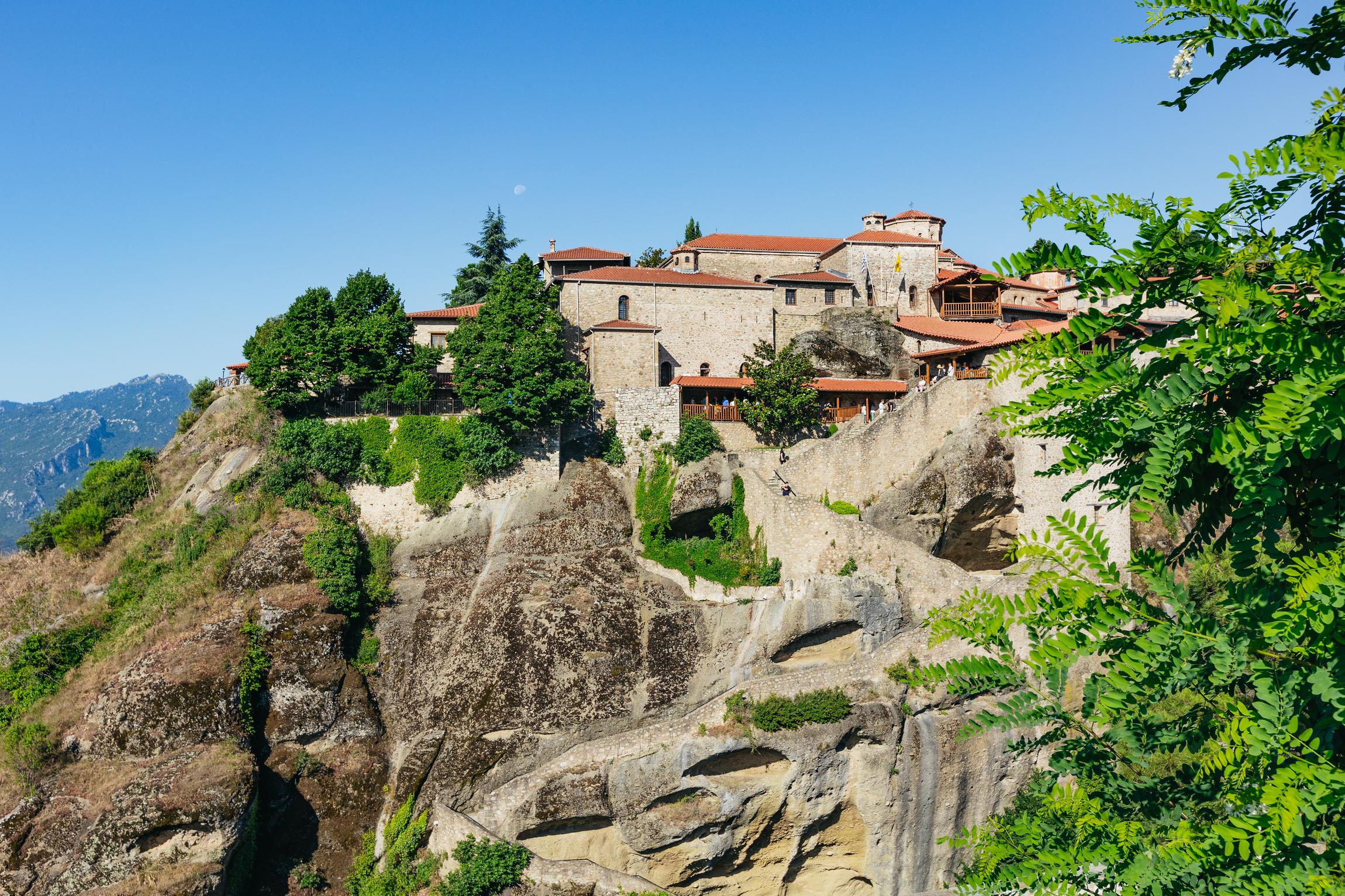
Journey through ancient Greece with expert guides—explore Apollo's sanctuary and cliffside monasteries
9 hours
Free Cancellation
Discover ancient Greece's most mystical sanctuary on a personalized journey to UNESCO-listed Delphi
10 hours
Free Cancellation
Discover ancient Greece's most sacred oracle site with personalized stops at legendary battlefields
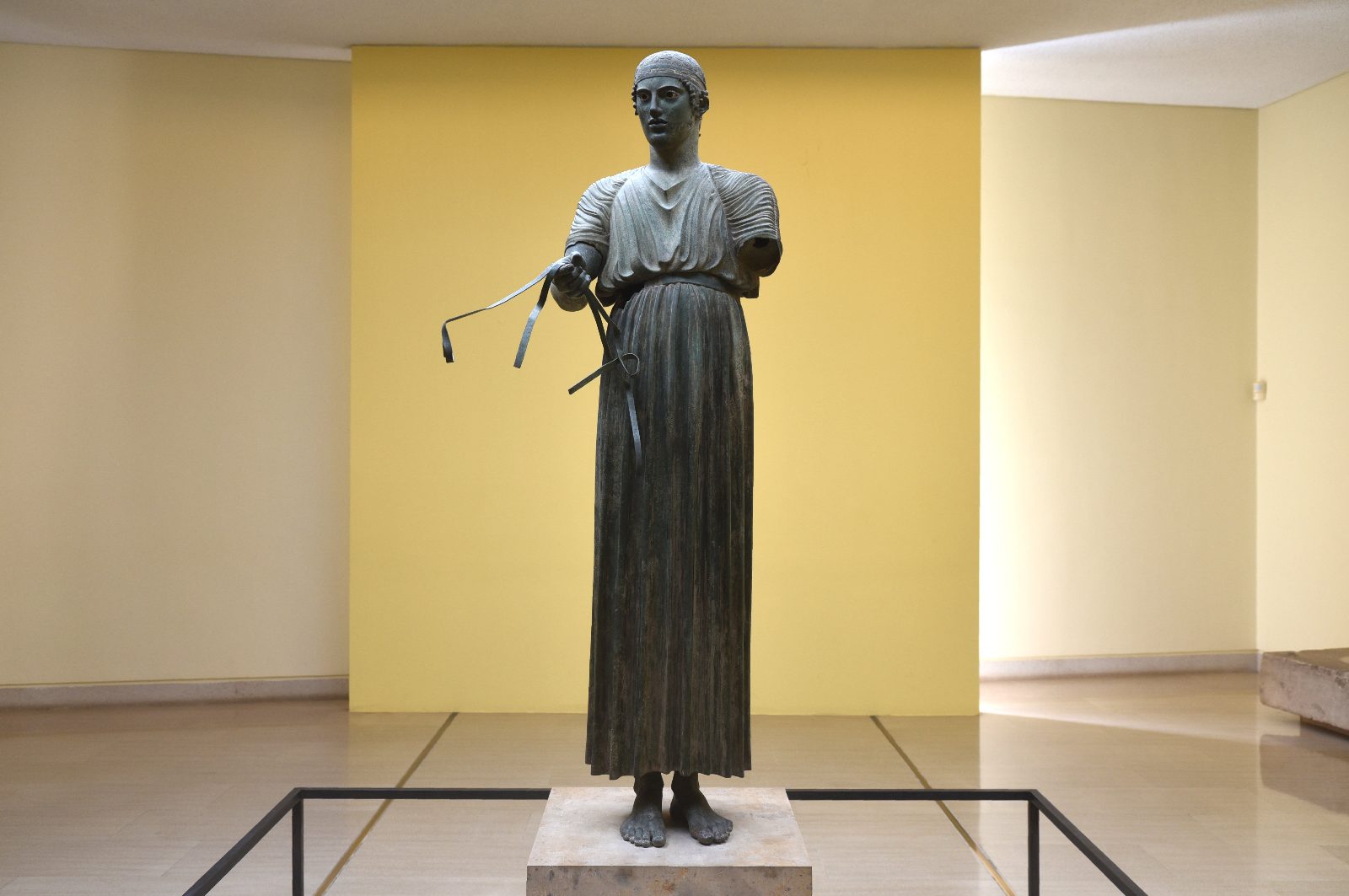
Start with the artifacts and the Charioteer
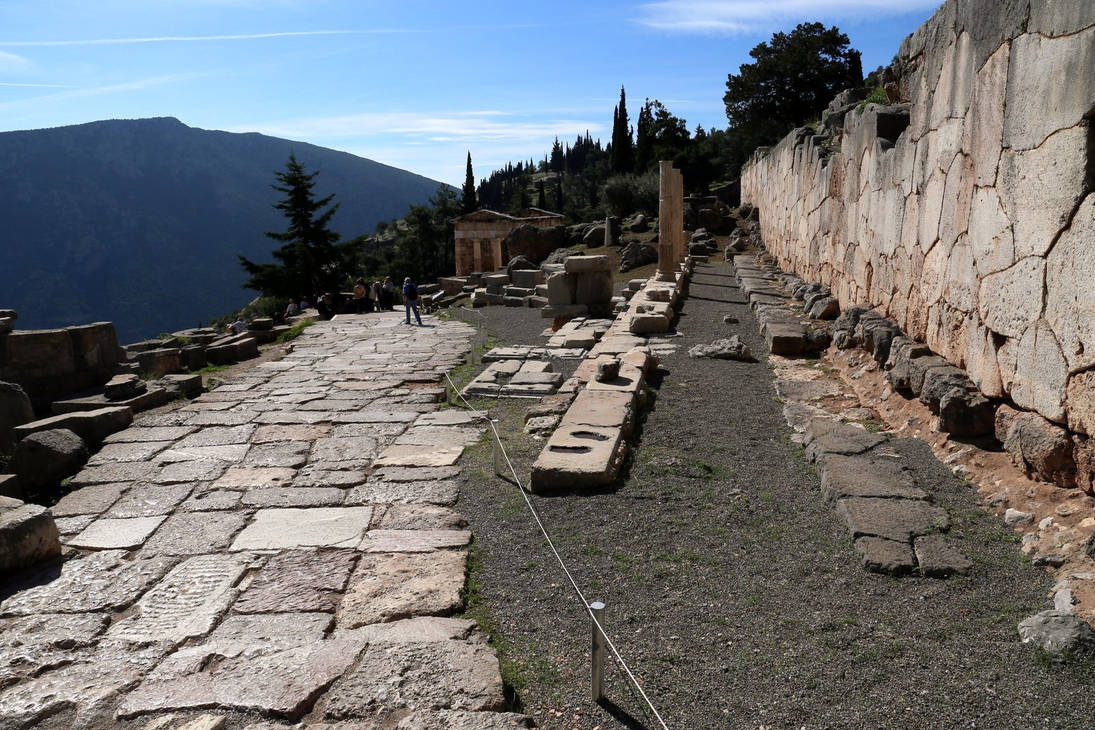
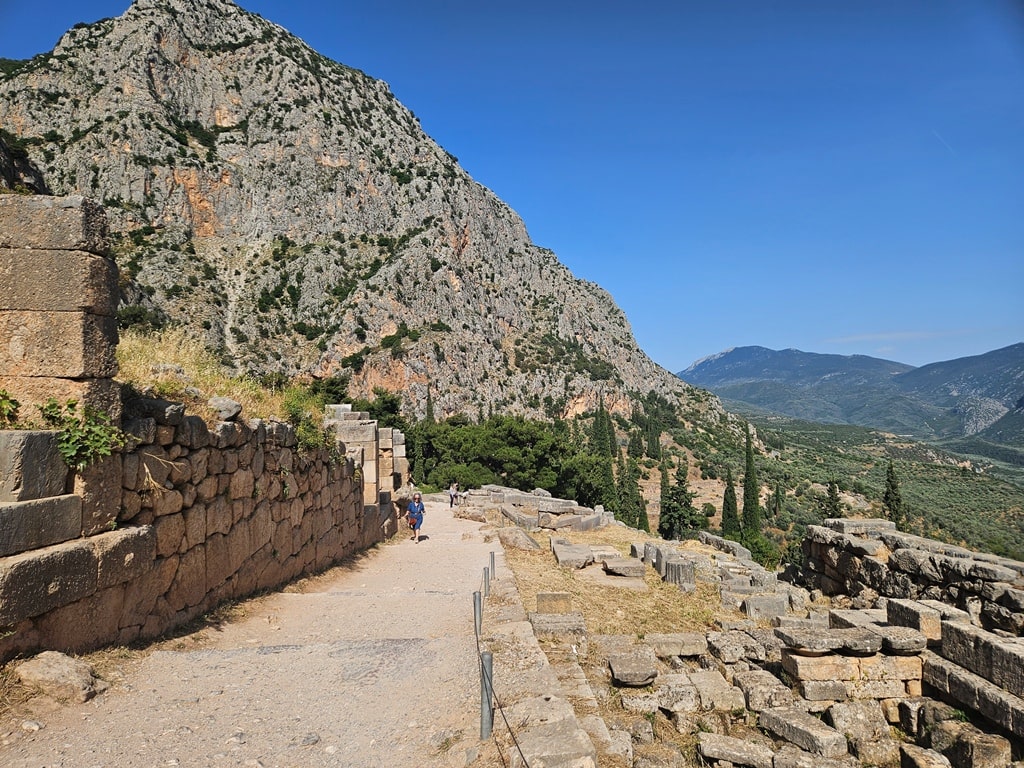
Walk the main path to the temple
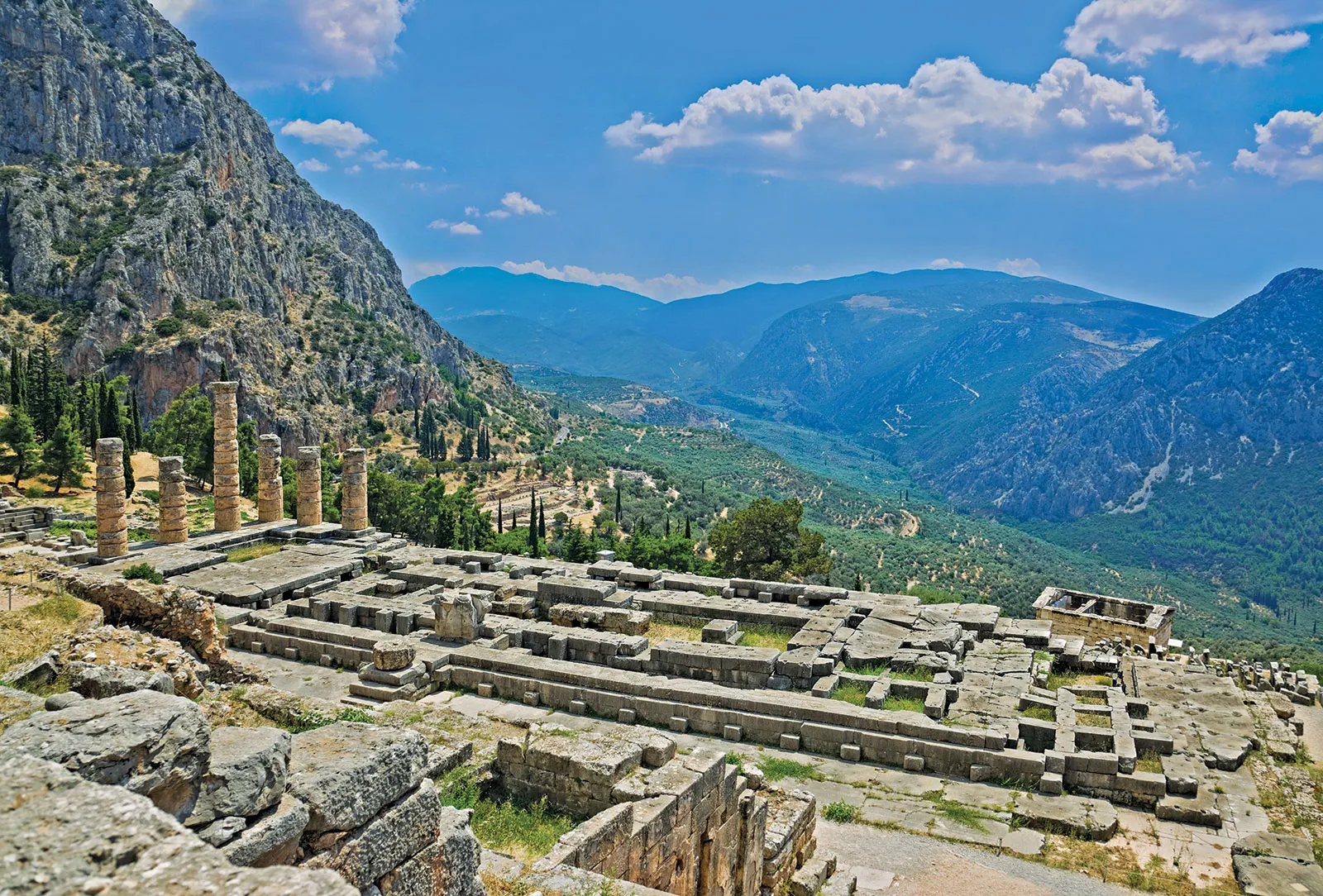
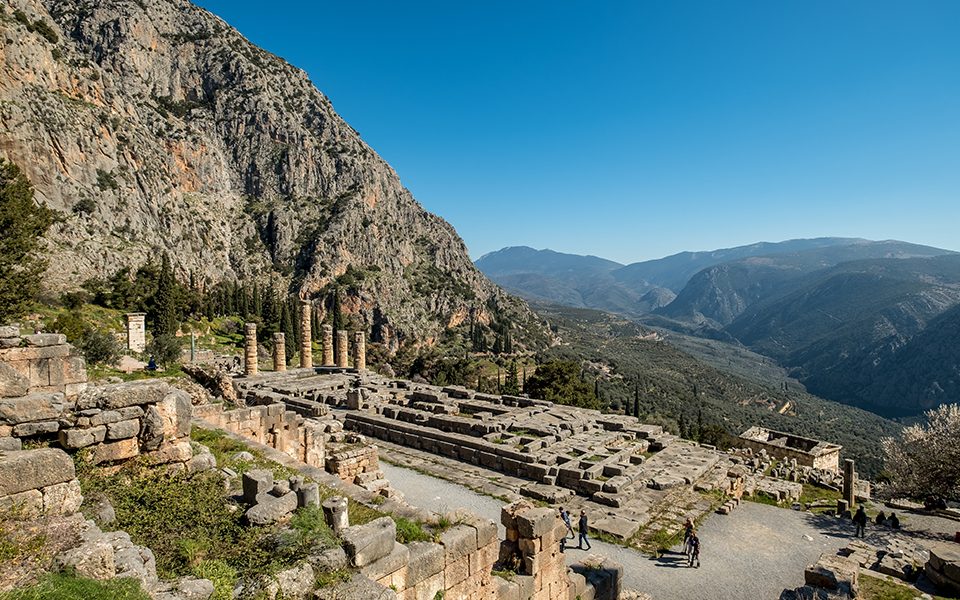
View the remains of the sanctuary
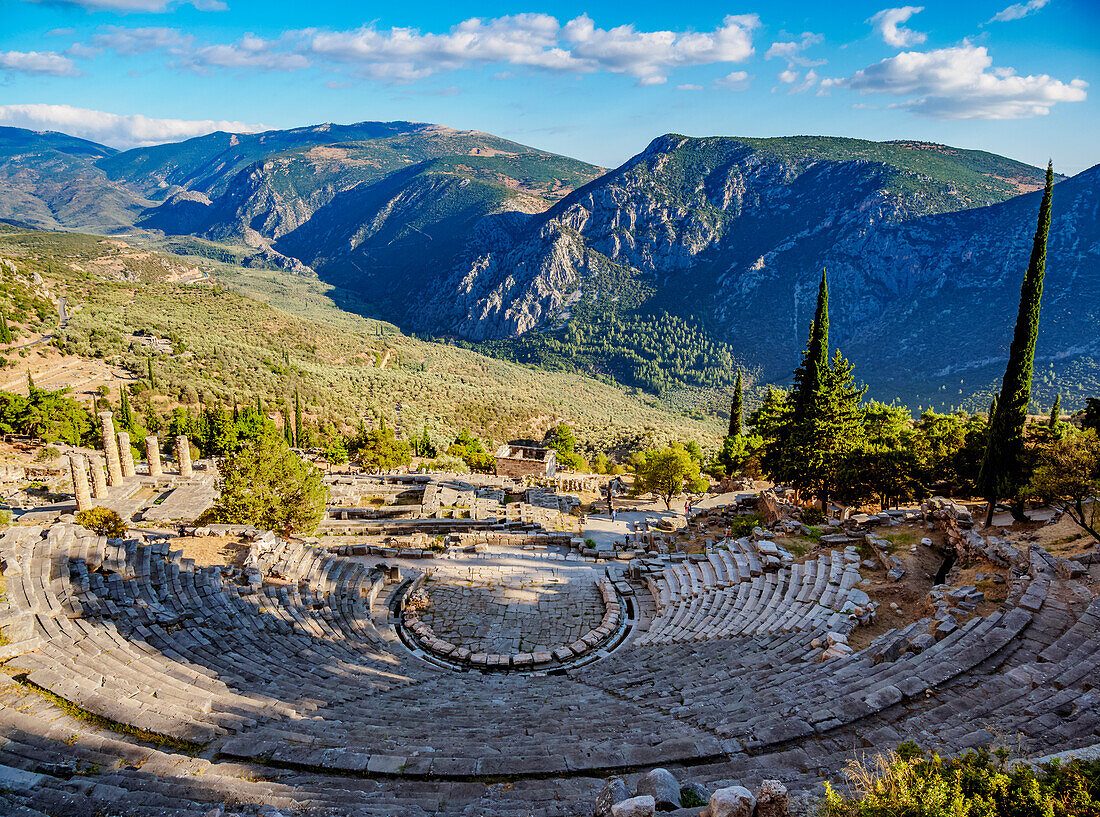
Climb to see the tiered seating
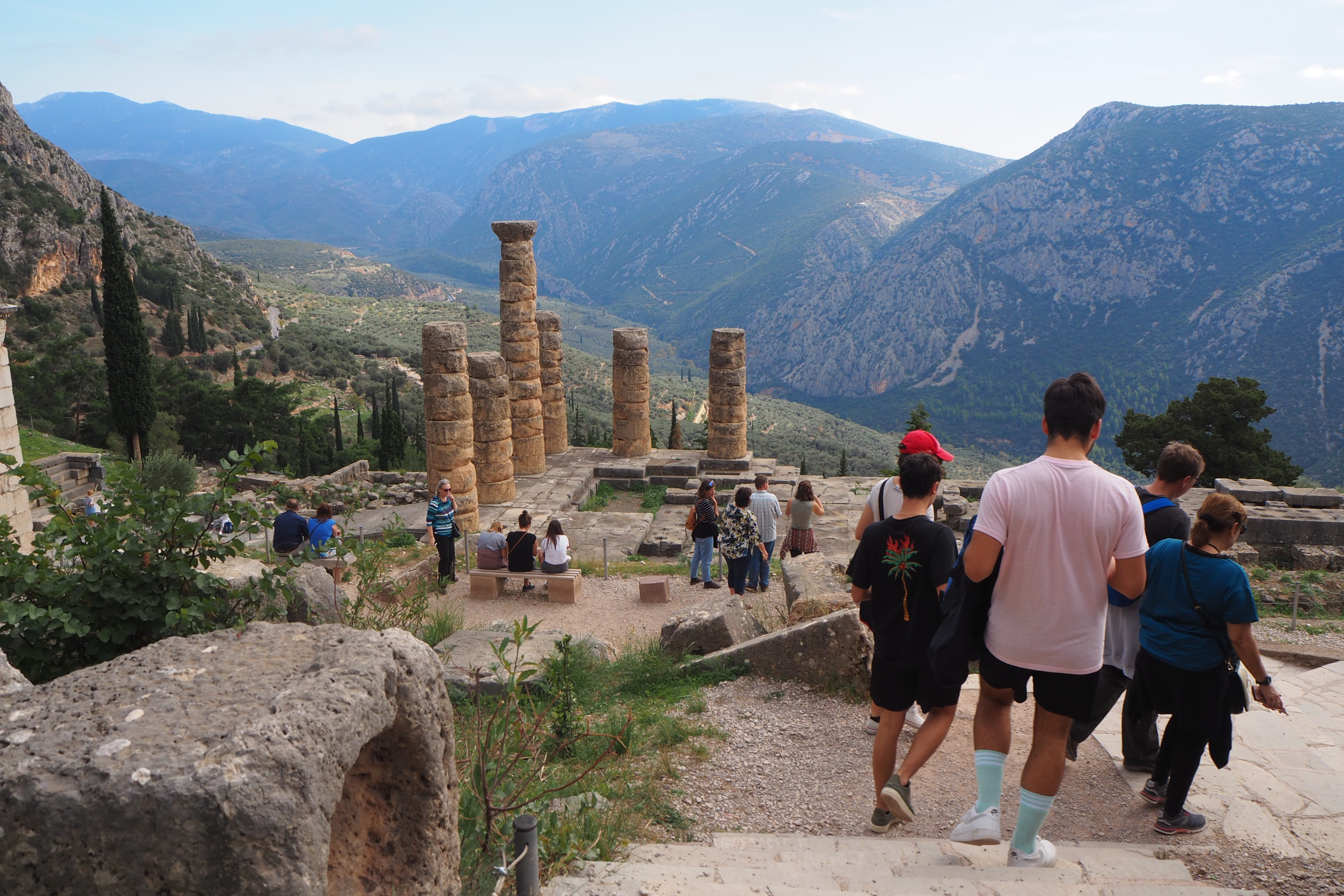
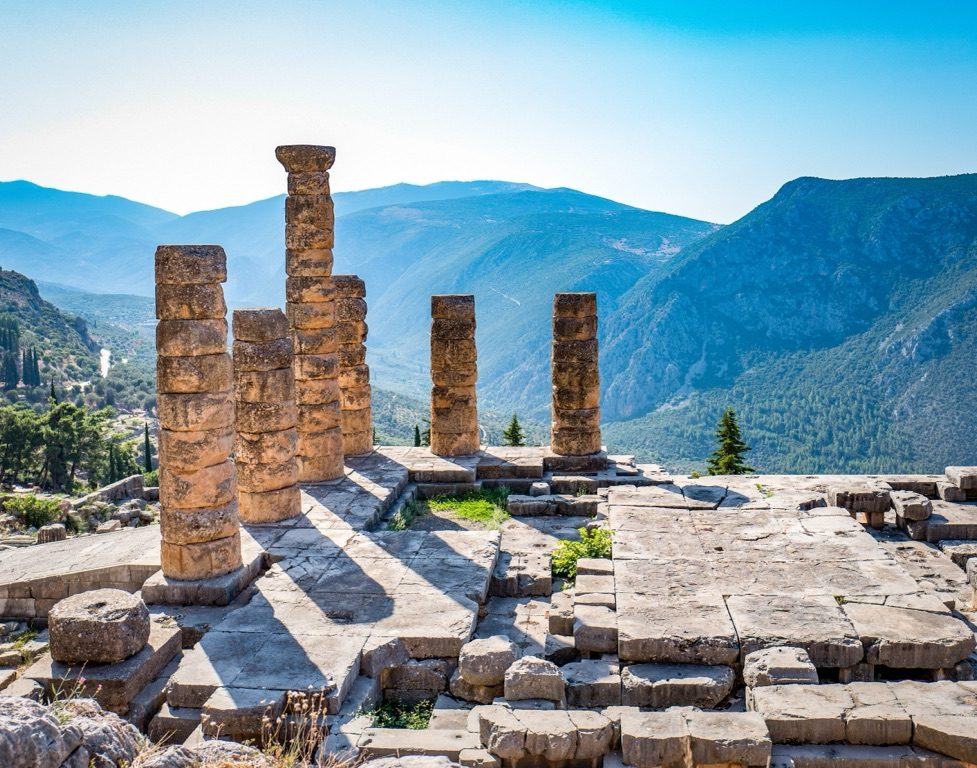
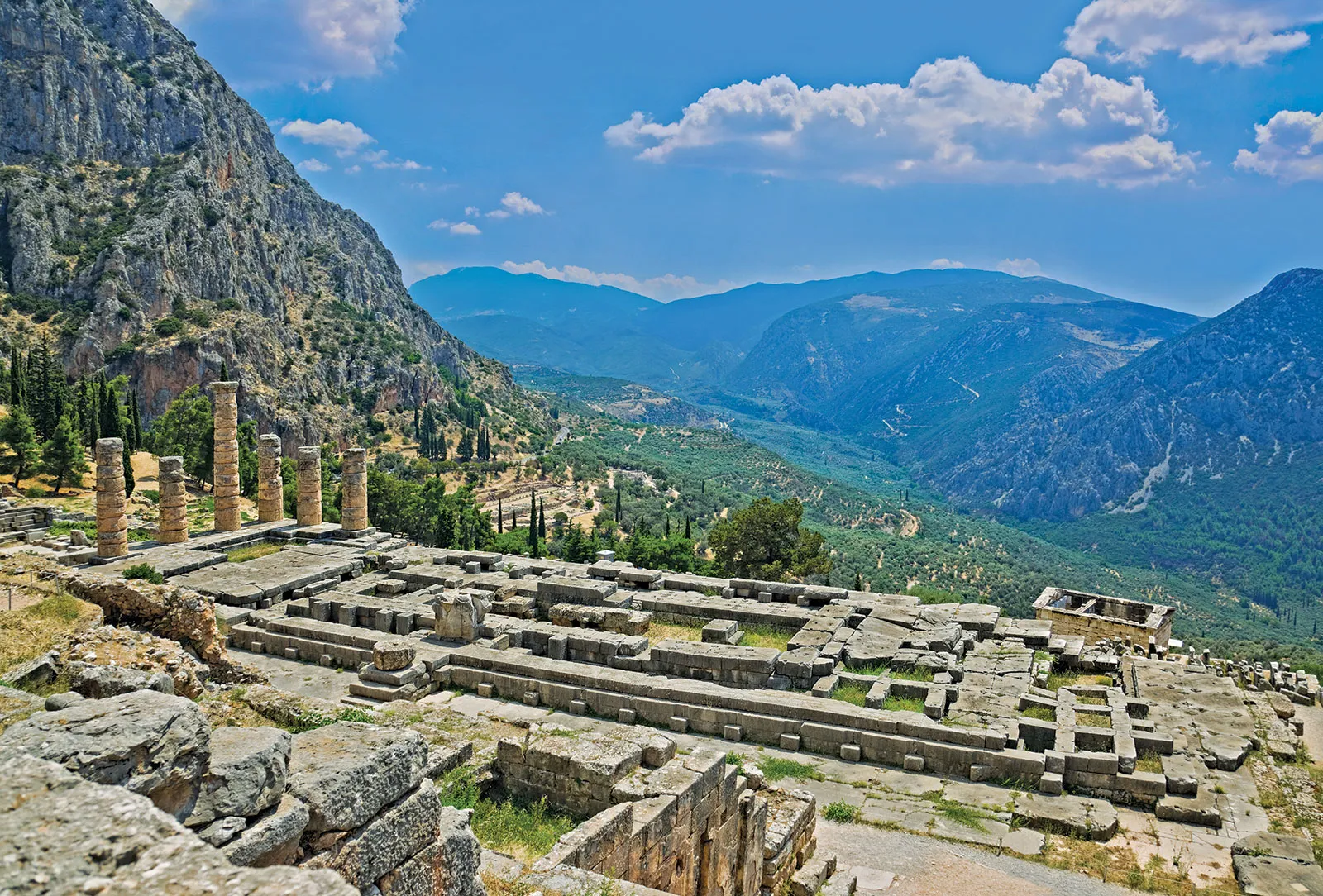
The center of the sanctuary where the Oracle delivered prophecies; only the foundations and partial columns remain. The original structure was rebuilt multiple times over the centuries.
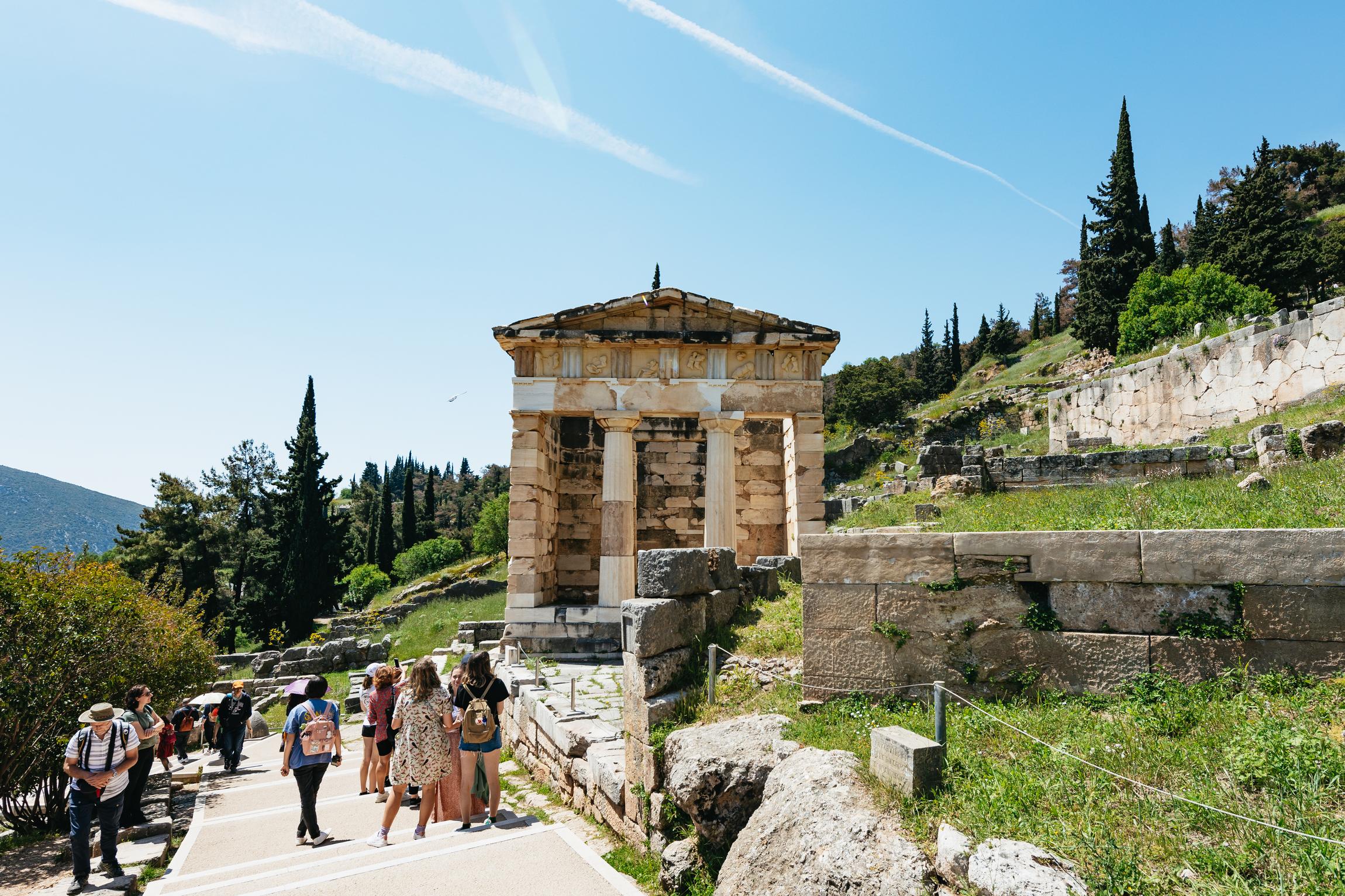
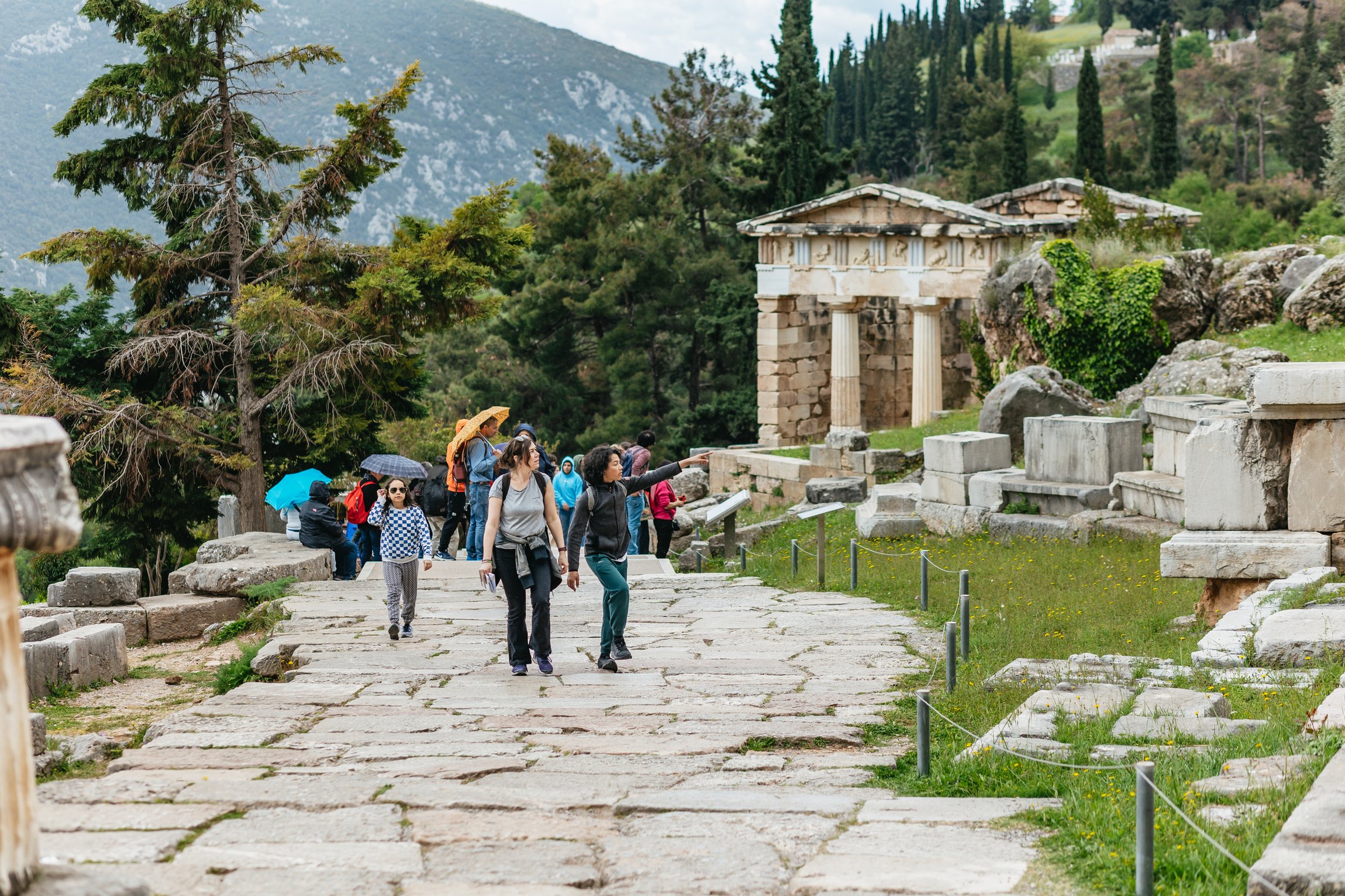
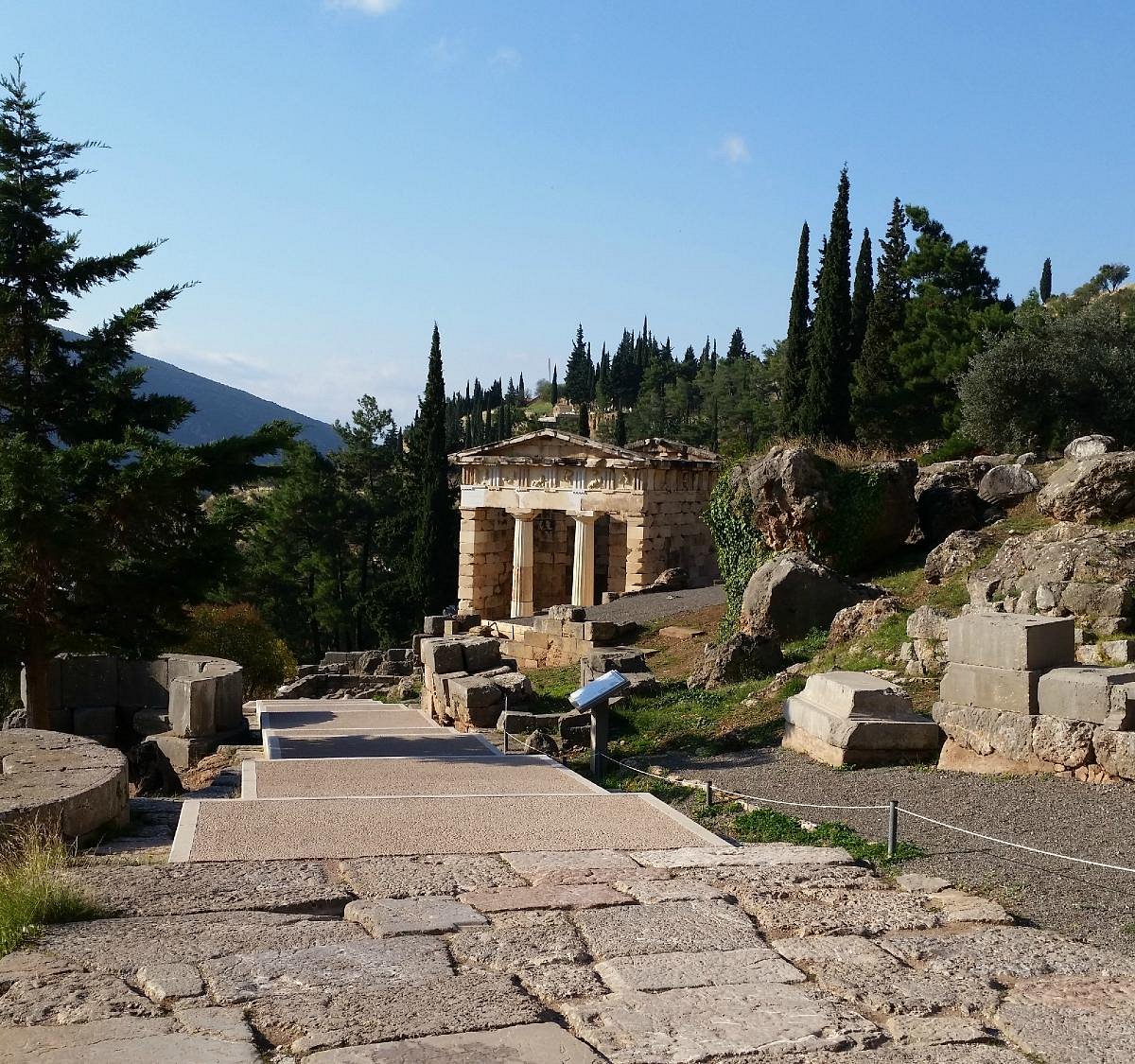
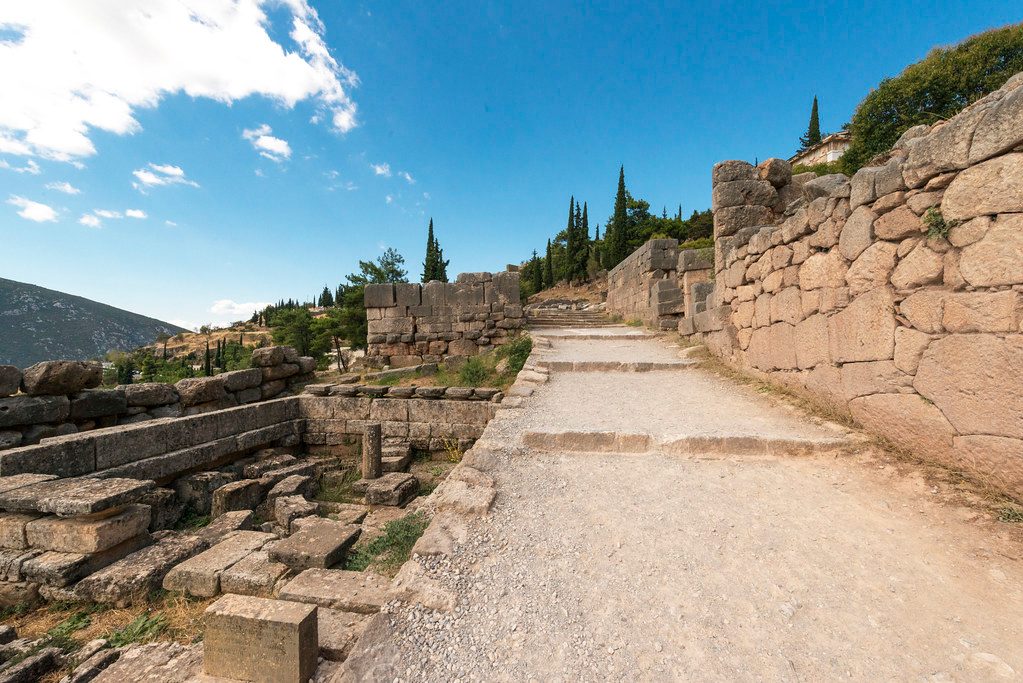
The winding path leading up to the temple, once lined with votive monuments and statues offered by various Greek city-states. It remains the main artery for visitors walking through the site.
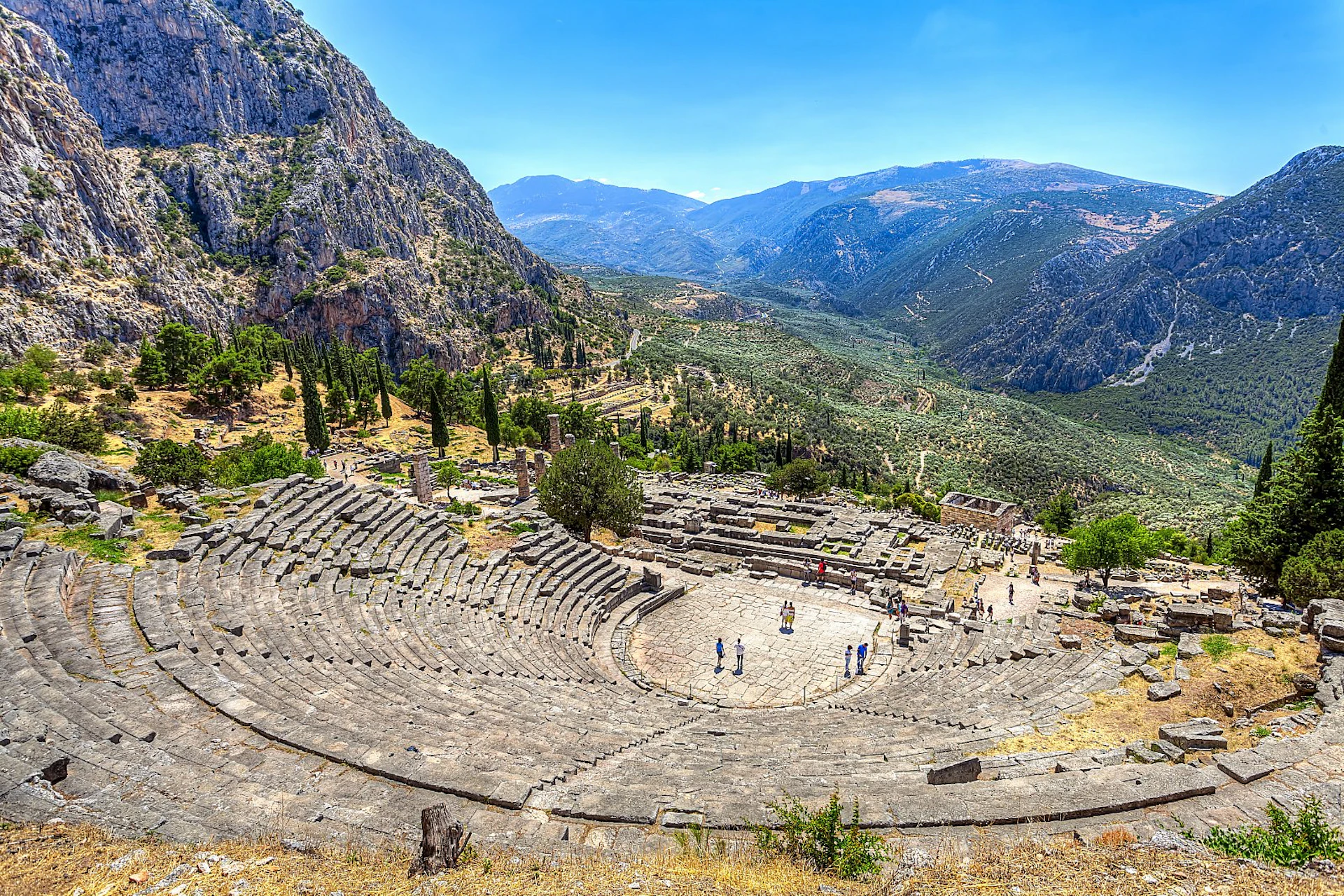
Built on the hillside, this structure offered spectators a view of the entire sanctuary and the valley below. It could accommodate approximately 5,000 spectators at its height.
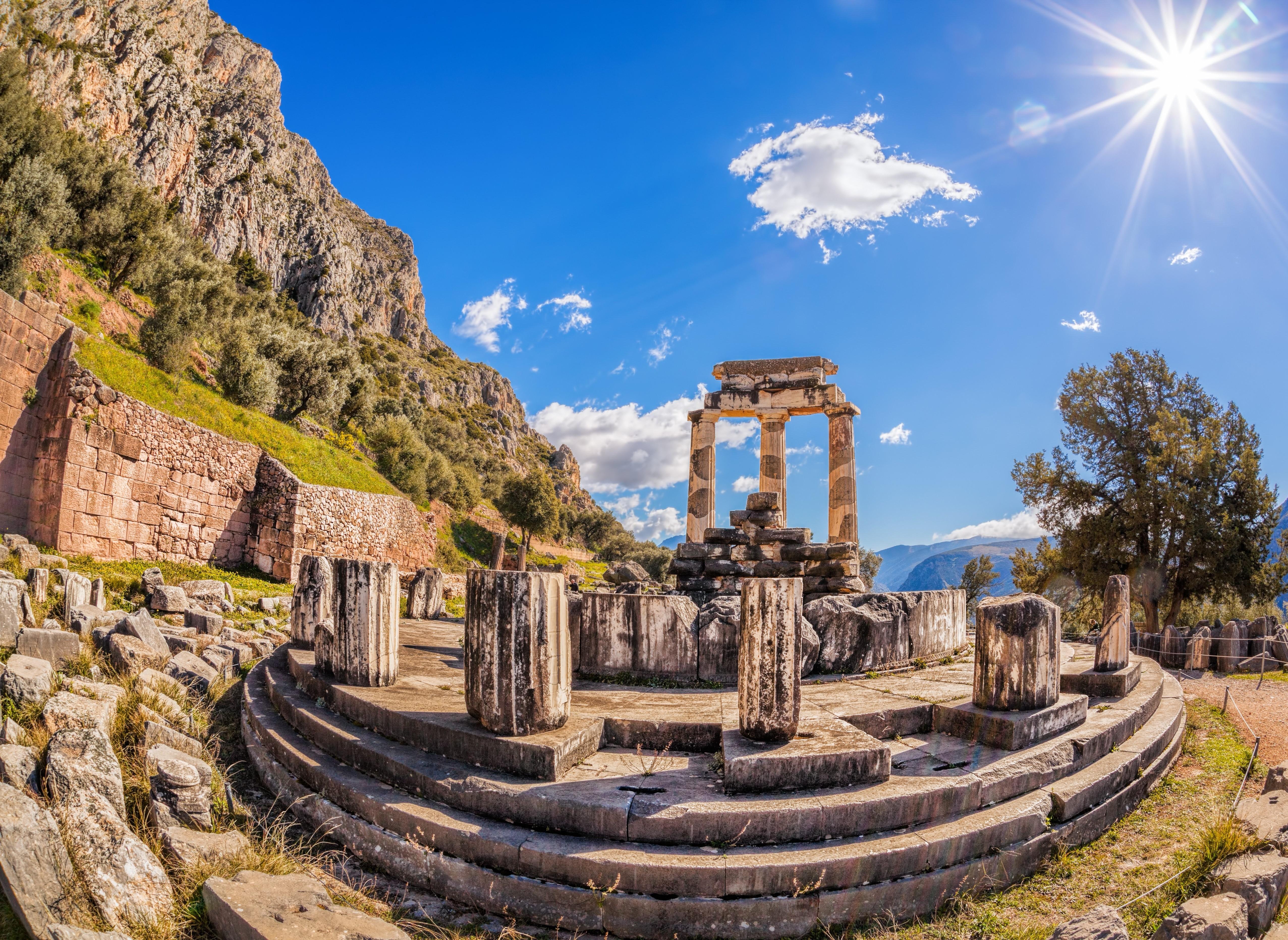
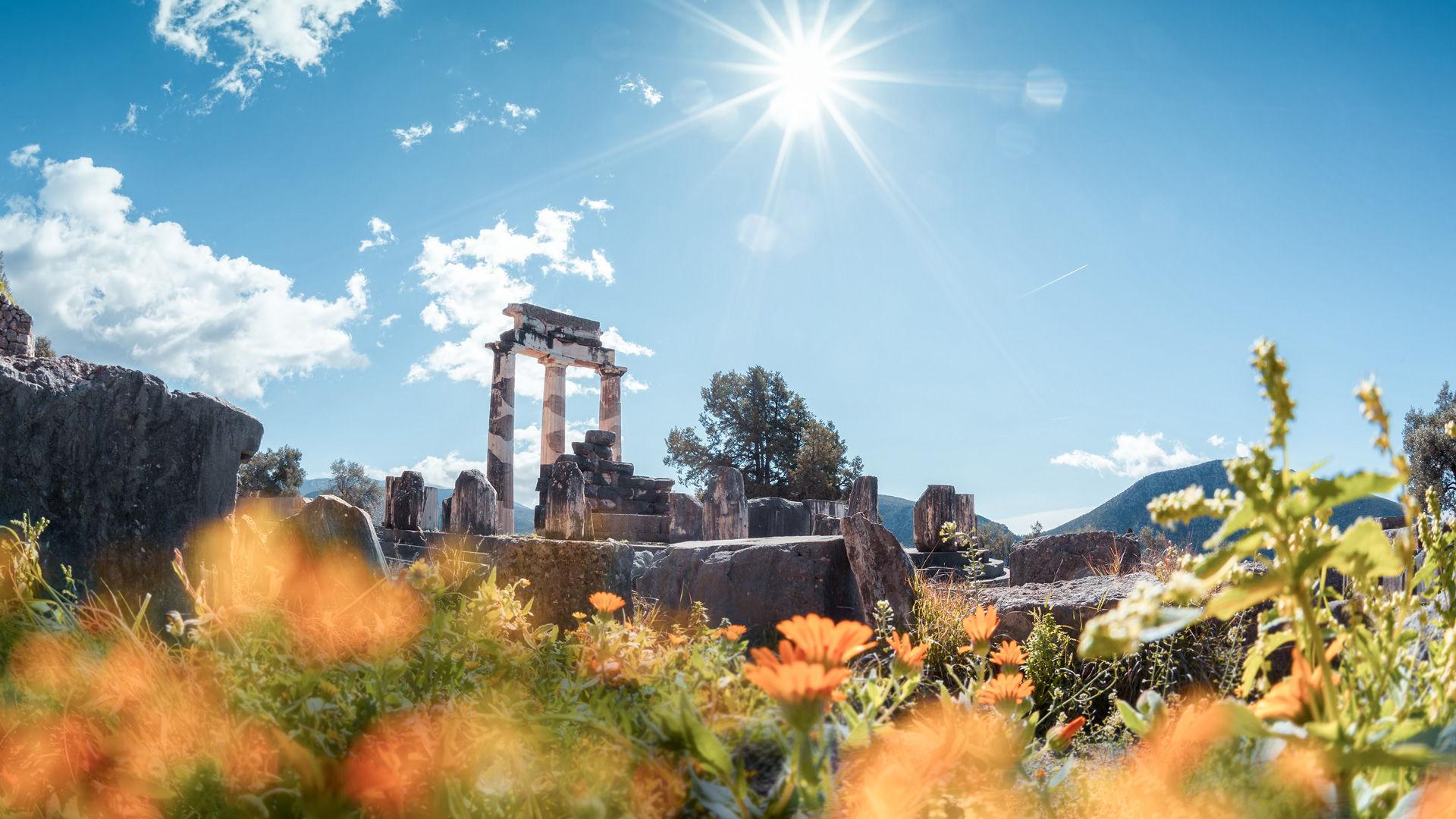
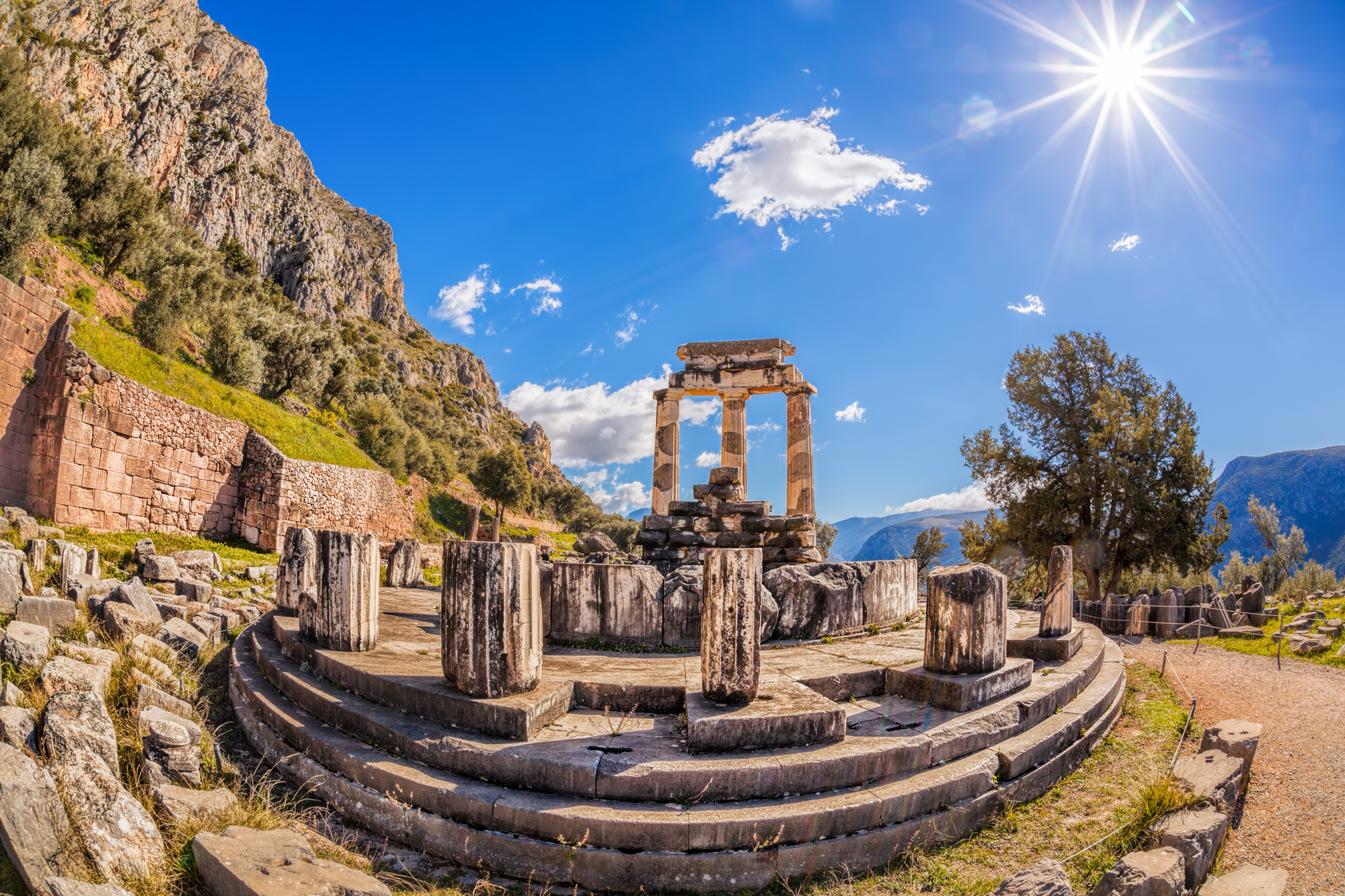
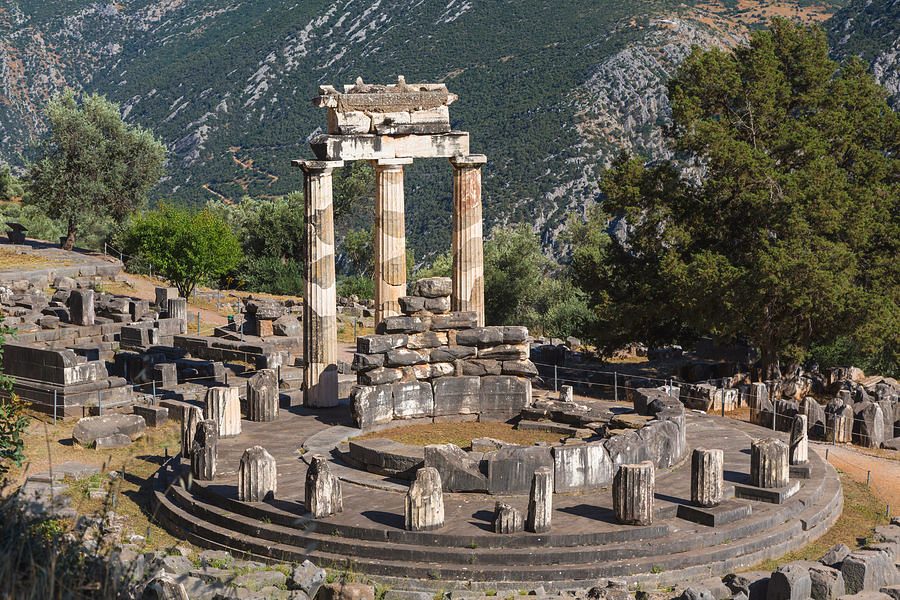
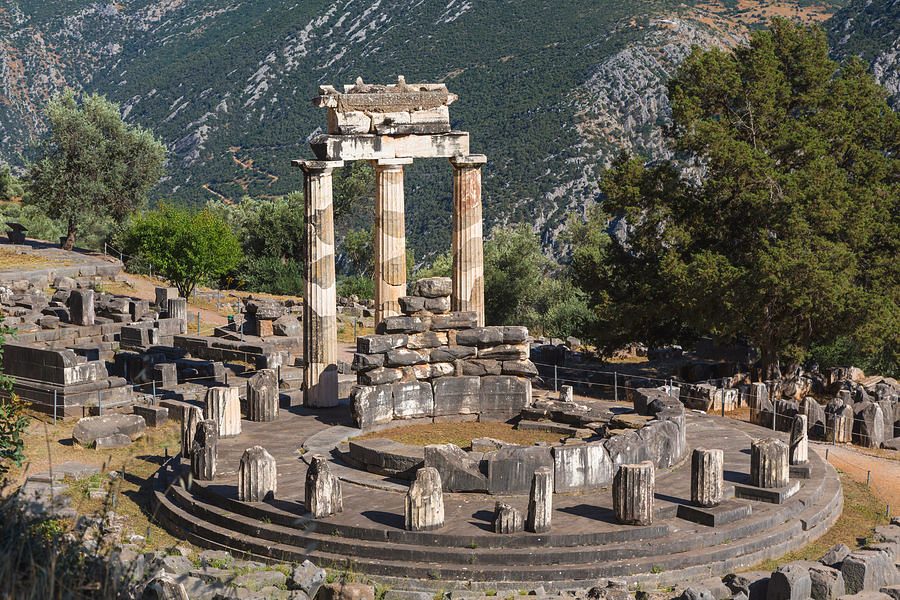
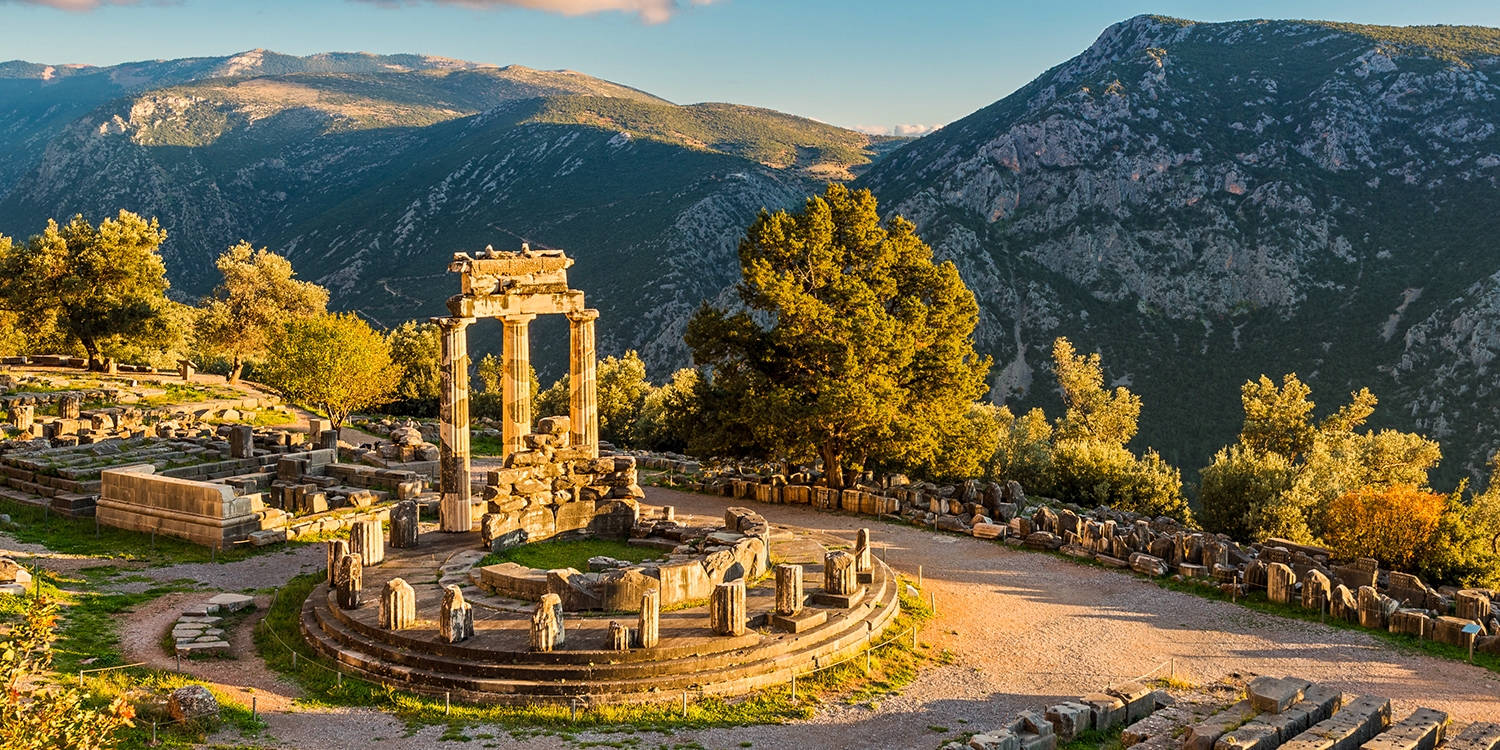
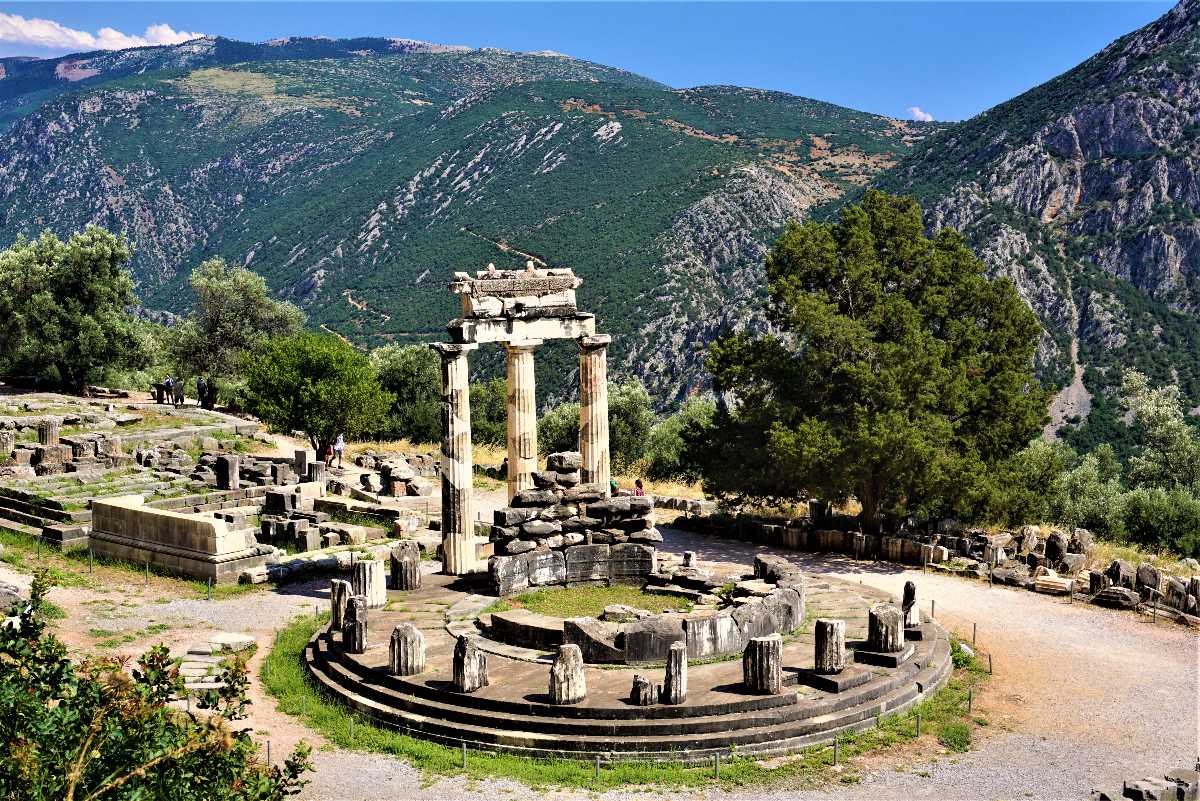
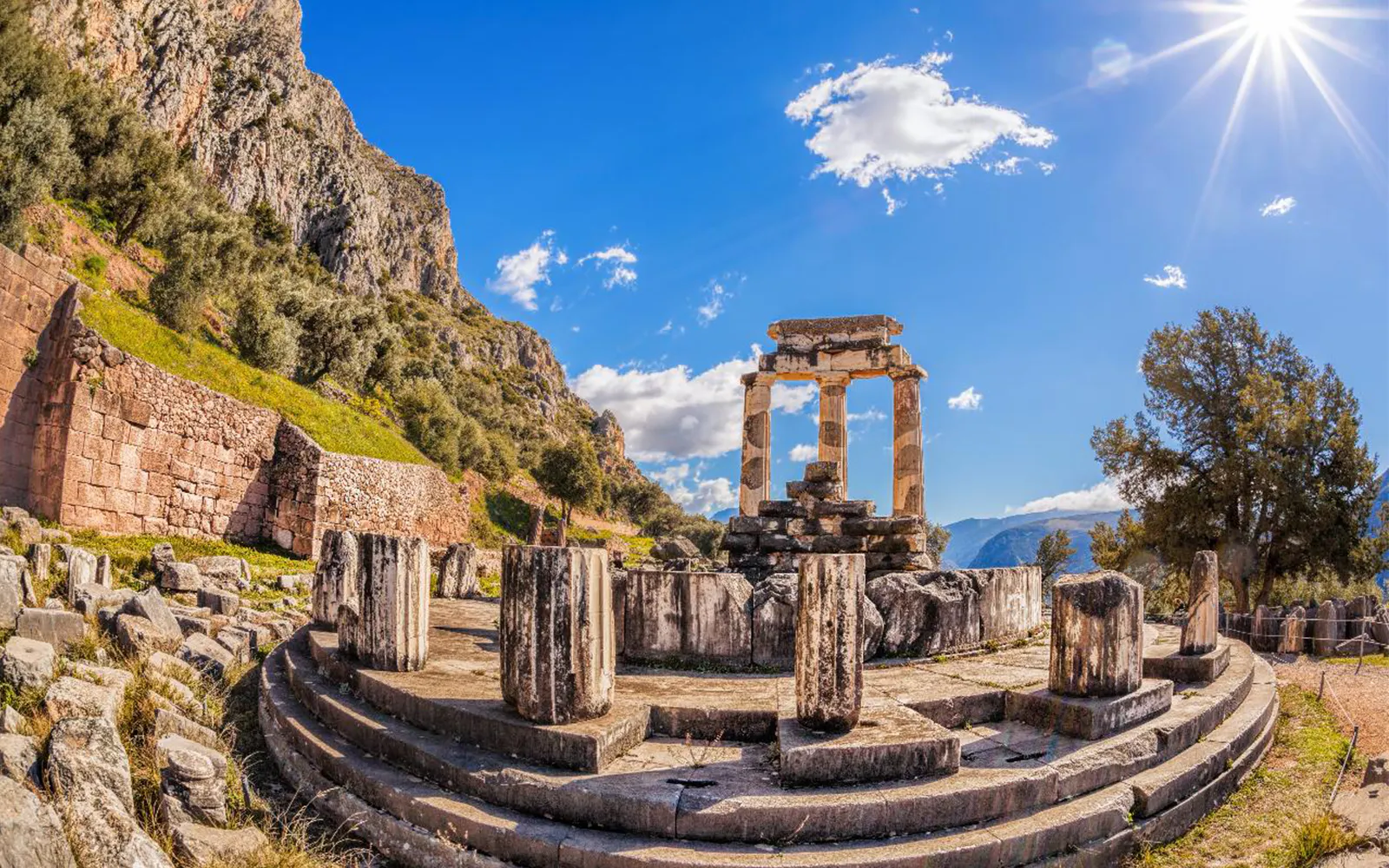
A circular building located at the site of Athena Pronaia, famous for its elegant architecture and mysterious purpose. It is one of the most photographed structures in the region.
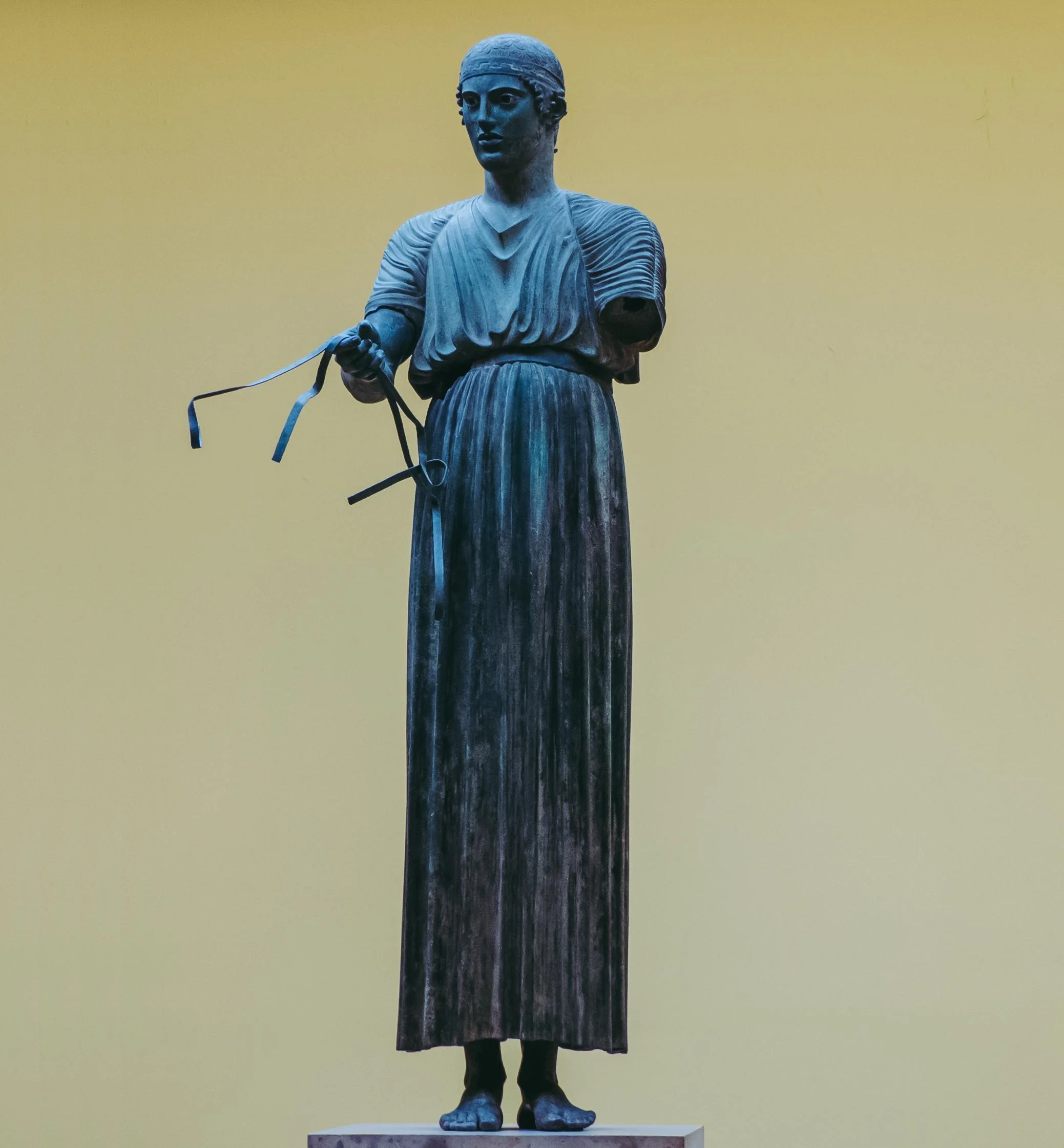
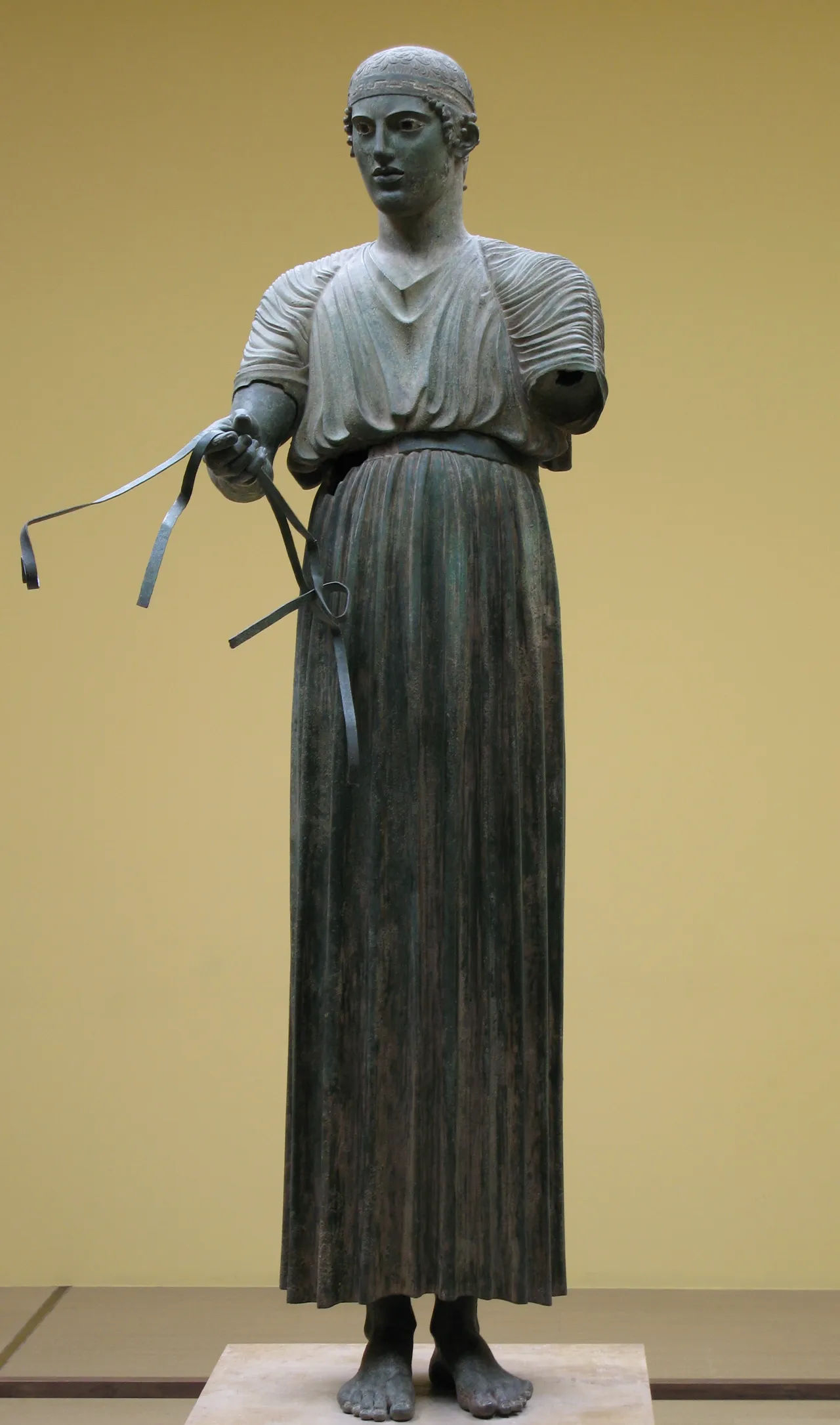
A life-size bronze statue housed in the museum, preserved from 478 BC. It is considered one of the finest examples of ancient Greek sculpture.
You leave Athens before sunrise, the highway tracing the Corinthian Gulf as the sky lightens over Boeotia. By the time you reach the mountain road to Delphi, the valley below is visible through switchbacks lined with olive groves.
You enter the archaeological site through the Roman agora, then begin the uphill walk along the Sacred Way. Treasury buildings flank the path, their inscriptions still legible in the morning light. The Temple of Apollo appears around the next bend, its six standing columns framed by the cliffs of Parnassus. You pause at the theatre, counting the tiers — 35 rows, enough for the entire ancient town. Above you, the stadium's stone starting line is still marked with grooves for runners' feet.
Inside the museum, you stand before the Charioteer, his bronze eyes inlaid with onyx and limestone. The Sphinx of Naxos occupies the central hall, its wings restored from fragments found along the Sacred Way. You return to the terrace outside, looking down at the Pleistos Valley where the modern town of Delphi sits below the ruins. The light has shifted. The columns cast long shadows across the temple platform, and you understand why the Greeks believed a god had chosen this ridge.
All the details about your upcoming adventure in one place
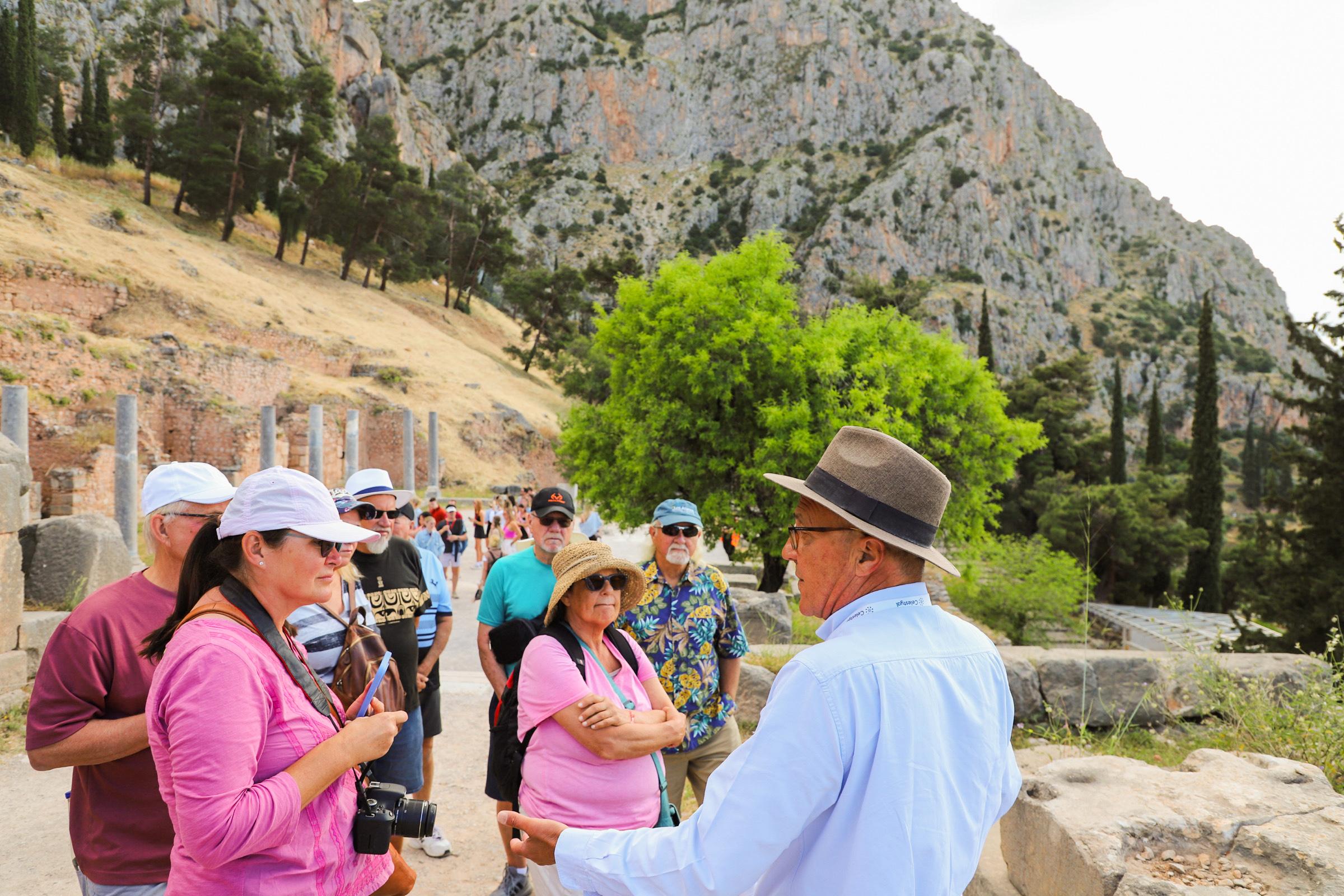
Delphi tours from athens transport visitors 180 km northwest to the archaeological sanctuary perched on Mount Parnassus slopes. These guided excursions cover the Temple of Apollo, ancient theatre, Delphi Archaeological Museum housing the Charioteer bronze, and the Tholos of Athena Pronaia. Most delphi tours from athens tours include round-trip coach transfer, licensed guide commentary on the Oracle's significance, and time to explore the Sacred Way leading to the temple ruins.
The ancient Greeks built no structure at Delphi by accident. Every column, every stone seat in the 5,000-capacity theatre, every votive offering embedded in the Sacred Way was positioned to honor Apollo, whose oracle spoke from a chasm beneath the Temple floor.
For nearly a millennium, kings and commoners climbed the southern slope of Mount Parnassus to hear the Pythia's prophecies, and the site grew wealthy on their tributes. By the second century BCE, Delphi's treasury held enough gold and silver to rival any Mediterranean city-state. The Romans continued the tradition until the fourth century CE, when the oracle fell silent and the sanctuary was abandoned to earthquakes and landslides.
Today, the archaeological site preserves the bones of that theocratic complex. The Temple of Apollo stands in partial ruin, six Doric columns still upright among the foundation stones. Above it, the theatre's limestone tiers face the Pleistos Valley, and higher still, the stadium where Pythian Games athletes competed every four years stretches 177 meters along the ridgeline. The site museum, rebuilt in 2007, holds the bronze Charioteer of Delphi, the marble Sphinx of Naxos, and the twin kouroi statues known as Kleobis and Biton — artifacts recovered from the Sacred Way and the temple's inner chambers. Delphi tours from Athens typically combine the ruins with the museum in a single morning or afternoon visit, allowing time to walk the stone path that ancient pilgrims followed.
The sanctuary's location explains its mythological weight. Apollo was said to have chosen Delphi as the center of the world, marked by the omphalos stone in the temple's adyton. Modern excavations by French archaeologists, which began in 1892 and continue intermittently, have mapped the site's urban grid: the treasury buildings of city-states like Athens and Siphnos, the polygonal retaining wall inscribed with manumission records, and the Castalian Spring where visitors purified themselves before entering the oracle's presence. Delphi Greece tours from Athens often emphasize these architectural layers, each one documenting a different phase of Hellenic power. The site opened to the public in its current form in 1987, after decades of excavation removed Byzantine and Ottoman-era structures that had obscured the classical remains.

Every column at Delphi was positioned to honor Apollo, whose oracle spoke from a chasm beneath the Temple floor.
Conservative dress is recommended when visiting the sanctuary site. Ensure you wear comfortable walking shoes as the ruins are built into a steep hillside.
Large backpacks and bulky luggage are prohibited inside the archaeological site and museum. Small daypacks are permitted but may be subject to security inspection.
Personal photography is allowed throughout the archaeological site for non-commercial purposes. Tripods and professional photography equipment require advance authorization.
The site is suitable for children, though strollers are impractical on the rocky terrain. Carry infants in a sturdy baby carrier to navigate the ruins.
The site features significant inclines and rocky paths that are challenging for wheelchair users. Certain sections are accessible via paved walkways near the entrance.
Eating and drinking are strictly prohibited within the archaeological ruins and museum galleries. Visitors may consume refreshments at designated areas outside the site gates.
Opening Hours
See weekly schedule
Address
Delphi 330 54, Greece
Accessibility
Uneven terrain with steep inclines
Best arrival
08:00–10:00
Contact
+30 22650 82312
Car
Follow the National Road EO48 from Athens, which takes approximately 2.5 hours. Parking is available near the entrance, though spaces fill quickly during peak hours.
Public transport
KTEL buses run daily from Athens to Delphi, departing from the Liosion terminal. The journey lasts roughly 3 hours.
Full refunds are typically available for delphi tours from athens if cancelled at least 24 hours in advance. Ticket prices include the 20 EUR standard adult entrance fee.
Recommended time
4-5 hours
To fully explore the sanctuary and the onsite museum, allow for a half-day visit when booking delphi tours from athens. Most visitors spend two hours navigating the steep path of the archaeological site before spending additional time examining the bronze charioteer and other artifacts. Planning your delphi tours from athens tours to arrive early ensures you can navigate the Temple of Apollo and the theater before the midday heat. Opting for these delphi tours from athens tickets during off-peak hours helps avoid the heavy influx of coach passengers who arrive by mid-morning.
Crowd levels through the day
Weather · crowds · average price — dots go green to amber to red as each metric rises.
Mild temperatures and blooming landscapes make this an ideal time for delphi tours from athens.
Expect hot, dry conditions; prioritize early morning visits to beat peak temperatures.
Comfortable walking weather with fewer crowds, perfect for exploring these Greek landmarks.
Cooler weather and lower visitor numbers, though some paths can be slippery.
Plan for a mid-week visit if possible to escape weekend groups participating in delphi tours from athens.
Carry more water than you think you need, especially during summer visits.
Pick up a site map at the entrance to ensure you do not miss the hidden lower ruins.
Leave the sandals behind; the ancient stones are uneven and slippery when dry.
Mountain weather changes quickly, even in the shoulder seasons.
Bring a wide-angle lens to capture the scale of the theatre against the mountain backdrop.
Delphi's history begins in the late Bronze Age, when Mycenaean settlers established a shrine on the southern slope of Mount Parnassus around 1400 BCE. The site's original deity was the earth goddess Gaia, whose priestess delivered prophecies from a chasm emitting intoxicating vapors. By the eighth century BCE, Apollo had supplanted Gaia, and the sanctuary evolved into the most authoritative oracle in the Greek world. The Pythia—a priestess who entered trance states while seated on a tripod above the sacred fissure—delivered cryptic pronouncements that shaped military campaigns, colonial ventures, and constitutional reforms across the Mediterranean. Delphi tours from athens now retrace the path pilgrims followed to consult this oracle, ascending the Sacred Way past treasuries built by rival city-states. The sanctuary reached its zenith between the sixth and fourth centuries BCE. In 548 BCE, fire destroyed the original Temple of Apollo; the Alcmaeonid family of Athens funded its reconstruction in marble, securing political favor through their patronage. The Amphictyonic League—a coalition of Greek states—governed the site and organized the Pythian Games every four years, rivaling Olympia in prestige. Conflicts over control erupted in the Sacred Wars: the First Sacred War (circa 595–585 BCE) established Delphic independence, while the Third Sacred War (356–346 BCE) saw Philip II of Macedon seize influence after Phocian forces plundered the treasury. Roman generals later consulted the oracle during their eastern campaigns, but imperial patronage shifted to other cults. By the fourth century CE, Christian emperors actively suppressed pagan worship. Theodosius I banned divination in 393 CE, silencing the oracle after nearly a millennium of continuous operation. Archaeological excavation began in 1892 under the French School at Athens, which removed the modern village of Kastri to uncover the ancient ruins. Today's delphi tours from athens ticket grants access to the Temple of Apollo, the theater with its sweeping valley views, and the stadium where athletes competed for laurel crowns woven from trees in the sacred Pleistos gorge.
Mycenaean settlers establish a shrine to Gaia on the slopes of Mount Parnassus.
Apollo replaces Gaia as the sanctuary's principal deity and the oracle gains pan-Hellenic authority.
Fire destroys the original Temple of Apollo; the Alcmaeonid family finances its marble reconstruction.
The First Sacred War establishes Delphic independence under Amphictyonic League governance.
The Third Sacred War ends with Philip II of Macedon asserting control over the sanctuary.
Emperor Theodosius I bans pagan divination, effectively closing the oracle after a thousand years.
The French School at Athens begins systematic excavation, relocating the village of Kastri to expose the ruins.
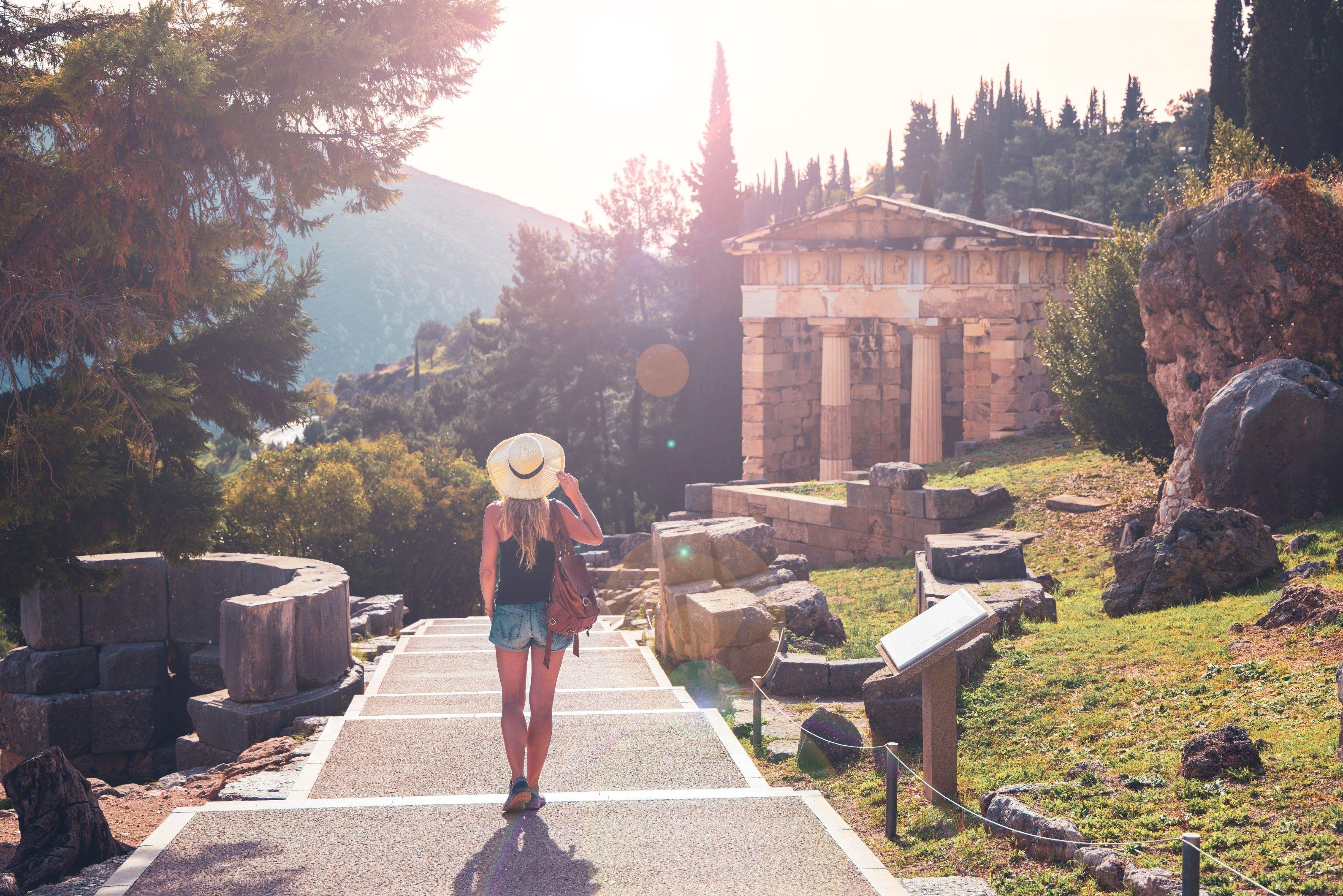
Stand on the lower path to frame the massive Doric columns against the backdrop of Mount Parnassus. This angle is a highlight for those on delphi tours from athens.
Position yourself from the upper viewing platform to capture the iconic circular structure nestled within the valley trees. This location is often included in a typical delphi tours from athens tour.
Focus your lens on the Charioteer of Delphi bronze statue housed within the gallery for detailed shots. Many who purchase delphi tours from athens tickets prioritize this interior exhibit.
Climb to the higher seating tiers to photograph the ancient stone rows with the valley landscape extending into the distance.
Most visitors arriving on delphi tours from athens will find the limited on-site options insufficient for a full meal, making the modern town of Delphi the preferred choice. A short walk uphill brings you to numerous tavernas overlooking the Pleistos Valley, which serve as an ideal stop for those using delphi tours from athens tours.
This family-run spot offers authentic Greek cuisine like moussaka and local olives. It provides a relaxed atmosphere for travelers arriving on delphi tours from athens tickets.
Real experiences from real travelers
Our guide on the delphi tours from athens provided context that brought the ruins to life. The theater carved into the mountain offers views across the valley that made the three-hour drive worthwhile. Arrive early to avoid midday heat on the exposed stone paths.
The site exceeded expectations with its mountain setting and well-preserved monuments. Walking the Sacred Way path where ancient pilgrims once traveled felt profound. Museum artifacts including the Charioteer are world-class.
Delphi sits higher up Mount Parnassus than I expected, with cooler temperatures than Athens. The stadium at the top rewards the climb with sweeping views. Allow three hours minimum to see both sanctuary and museum properly.
The oracle sanctuary location is dramatic but crowds gathered quickly after 11am. Our delphi tours from athens ticket included museum entry which housed notable bronze and marble pieces. Comfortable shoes essential for uneven ancient paving.
Standing where the Pythia delivered prophecies to ancient Greeks and Romans creates a powerful connection to classical history. The Tholos rotunda remains photogenic despite its partial state. September weather proved ideal for exploring.
The archaeological site spreads across terraced levels following the natural slope. Treasury buildings line the Sacred Way leading to Apollo's temple foundation. On delphi tours from athens we learned about the Panhellenic games held here every four years.
Ancient Delphi maintains remarkable integrity compared to other Greek sites. The theater's acoustic properties still function when tour groups test them. Museum displays complement outdoor exploration with detailed artifact labeling.
The combination of ruins and mountain landscape creates visual drama throughout the site. Afternoon light on the Pleistos valley olive groves below provides memorable photography. Our Athens day tour allocated sufficient time for thorough exploration.
Visiting the navel of the ancient world where Greek city-states sought divine guidance felt like essential Greek travel. The stadium at 178 meters length sits highest on the mountain. Early morning start from Athens recommended.
The Delphi sanctuary reveals layers of Greek history from archaic through Roman periods. Stone inscriptions still legible on treasury walls document ancient dedications. Taking guided delphi tours from athens tours helped decode the complex site layout and chronology.
Everything you need to know for your journey
The site is generally open from 08:00–20:00, with a shorter 10:00–17:00 schedule on Tuesdays. Check the schedule before booking your delphi tours from athens.
Most organized delphi tours from athens tours include pre-arranged access to help bypass long queues at the ticket office.
Yes, you can purchase delphi tours from athens tickets online to secure your entry and skip the physical line at the gate.
While the main museum is accessible, the outdoor archaeological site is steep and rugged, making full accessibility difficult.
Most visitors spend 3 to 4 hours exploring the archaeological site and the museum during their delphi tours from athens.
Yes, large luggage is not allowed; keep your daypack compact while visiting the Delphi site.
No, food is prohibited within the site, though water is permitted for all guests on delphi tours from athens.
The most common way to arrive is by private coach tour or KTEL public bus from the Liosion terminal in Athens.
There are no specific age limits, though the hilly nature of the site may be tiring for very small children.
The site typically remains open in light rain, so ensure you have appropriate gear for your delphi tours from athens.
Features the iconic circular tholos structure near the site entrance
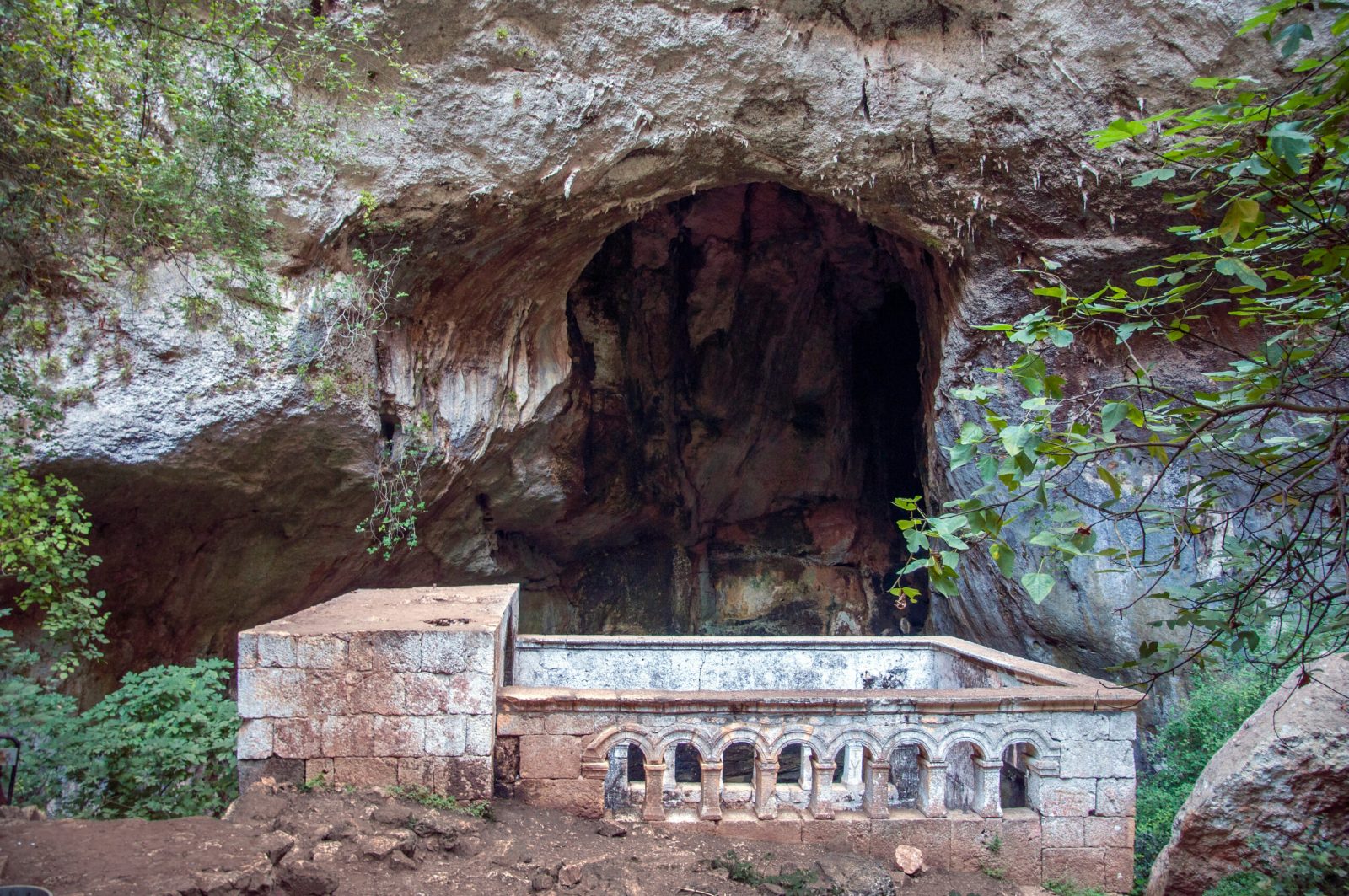
A high-altitude cave historically associated with the cult of Pan
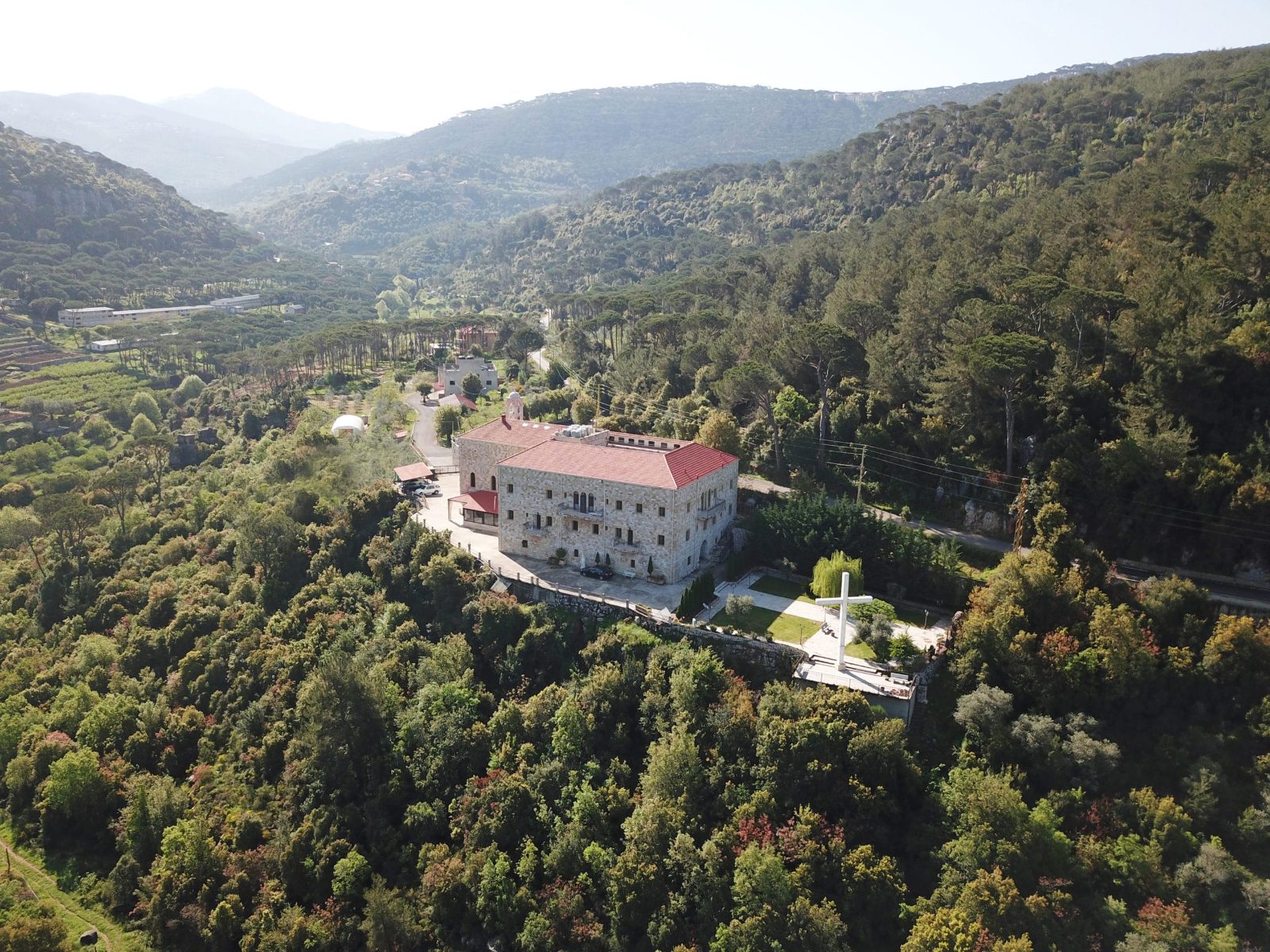
A historic site offering panoramic views over the valley
Houses major finds including the Charioteer and the Sphinx of Naxos
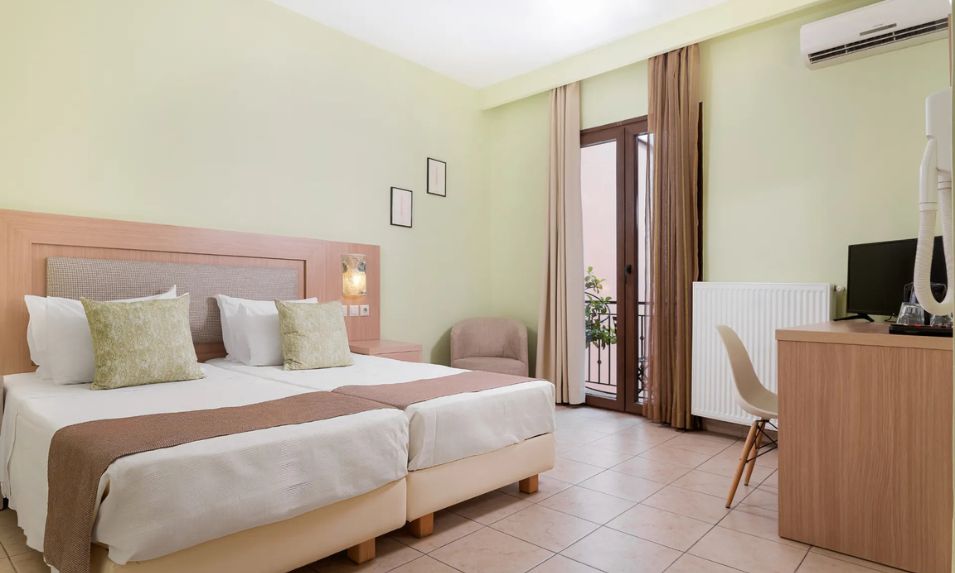
Standard hotel with valley views
Cozy lodging in the town of Delphi
Central district with numerous guesthouses
Join thousands of happy travelers who have discovered this incredible experience
Book Your Experience Now